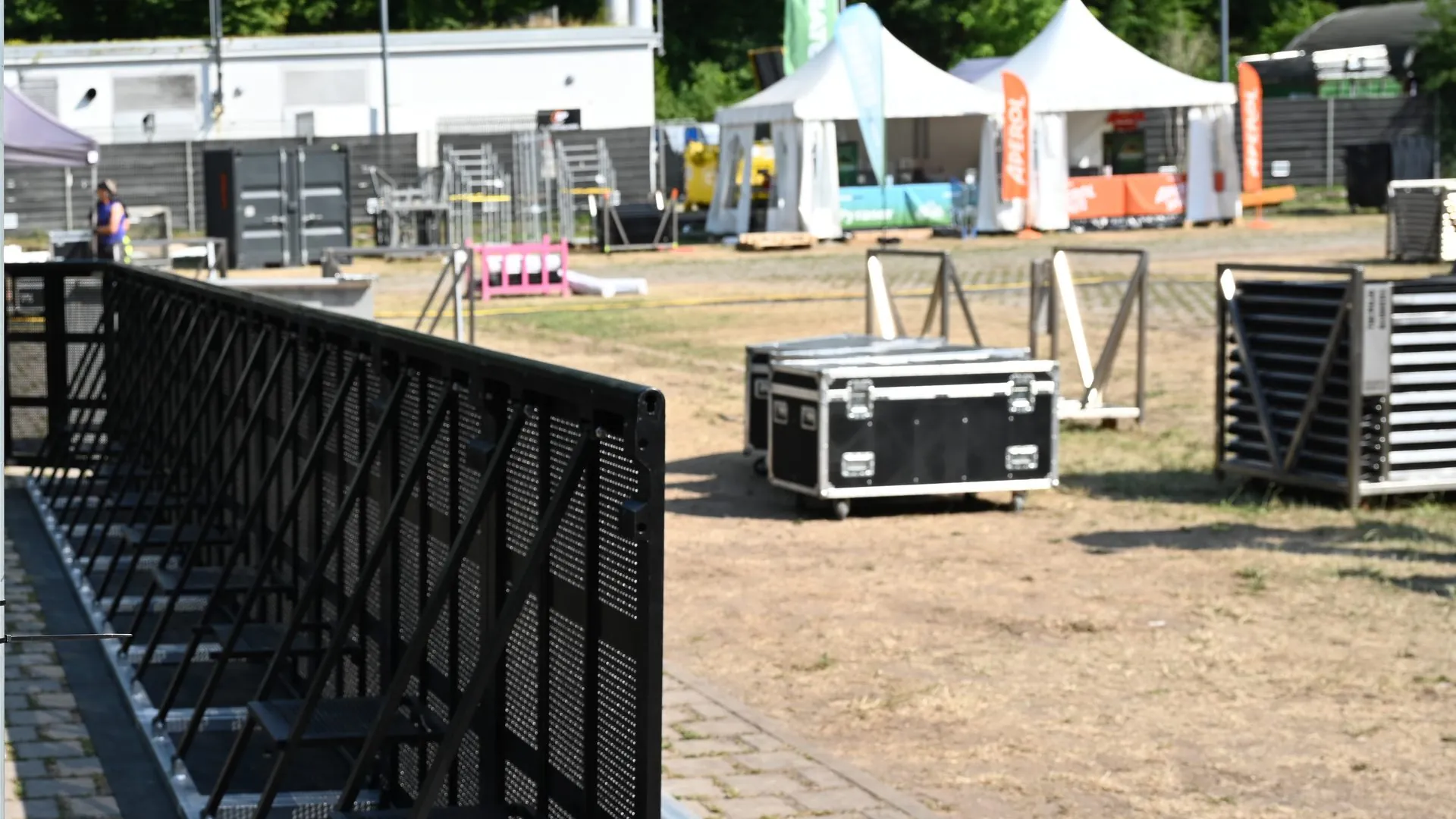
The layout is planned early
The barrier layout is planned early, together with the organiser and the other parties on site. That planning is part of the Mojo Barriers crowd control approach.
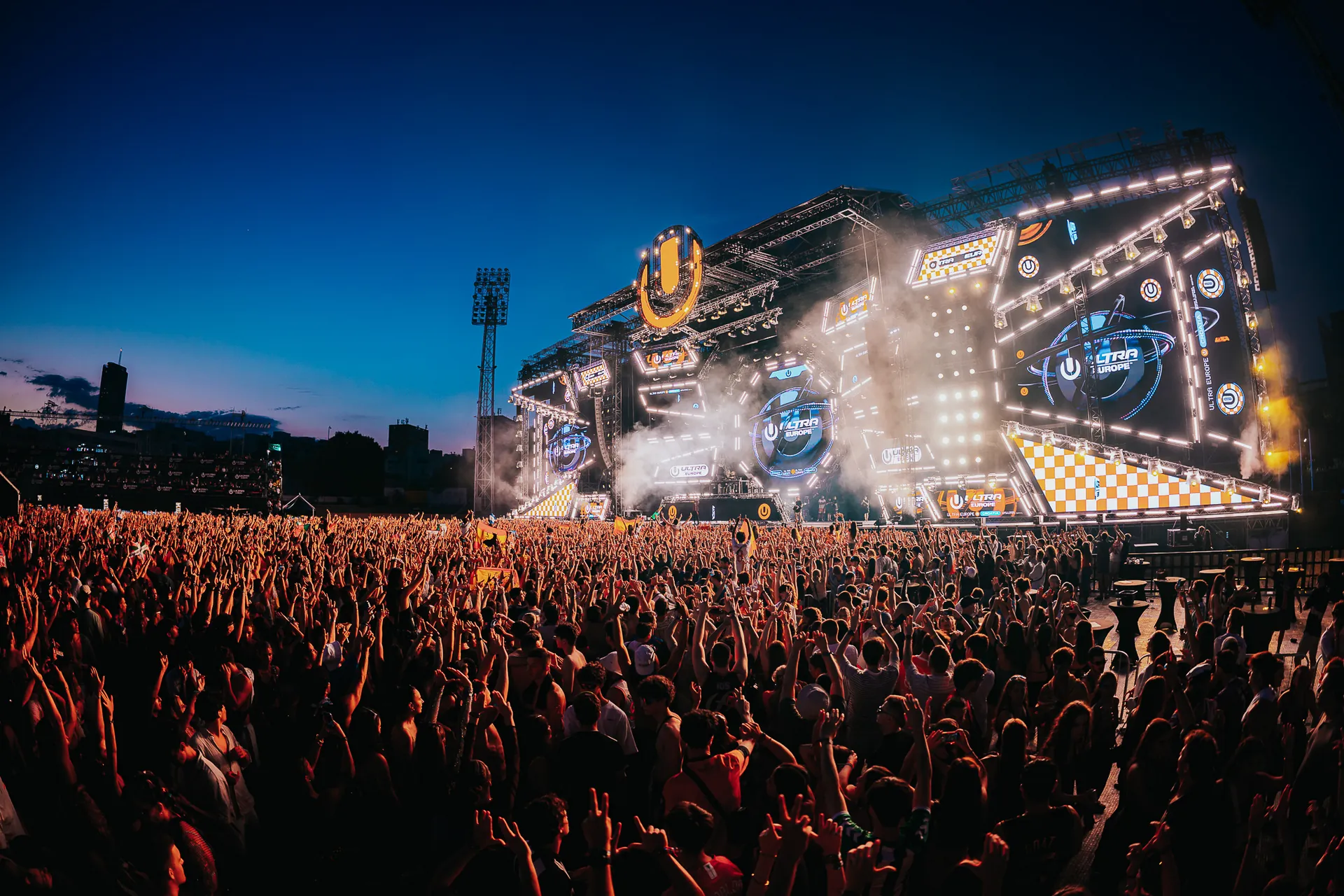
Health and safety
Mojo Barriers BV designs its stage barriers around the health and safety of the audience, the artists and the production teams who work on either side of the line.
Why it matters
The stage barrier is the only piece of production equipment the audience touches, so its integrity is essential. The barrier line divides the site into separate zones: the audience on one side, the artists, the crew and the working areas of the production on the other. Mojo Barriers gives the safety of all three groups the highest priority, from the design of each part to the way crews handle it on site. The people who design the barriers and train the crews are introduced inside Mojo Barriers BV.
Safety in the detail
A Mojo Barrier® holds because the crowd stands on its floorplate, as explained in how a Mojo Barrier works. Three details are designed for the people who lean on it and the crews who handle it.
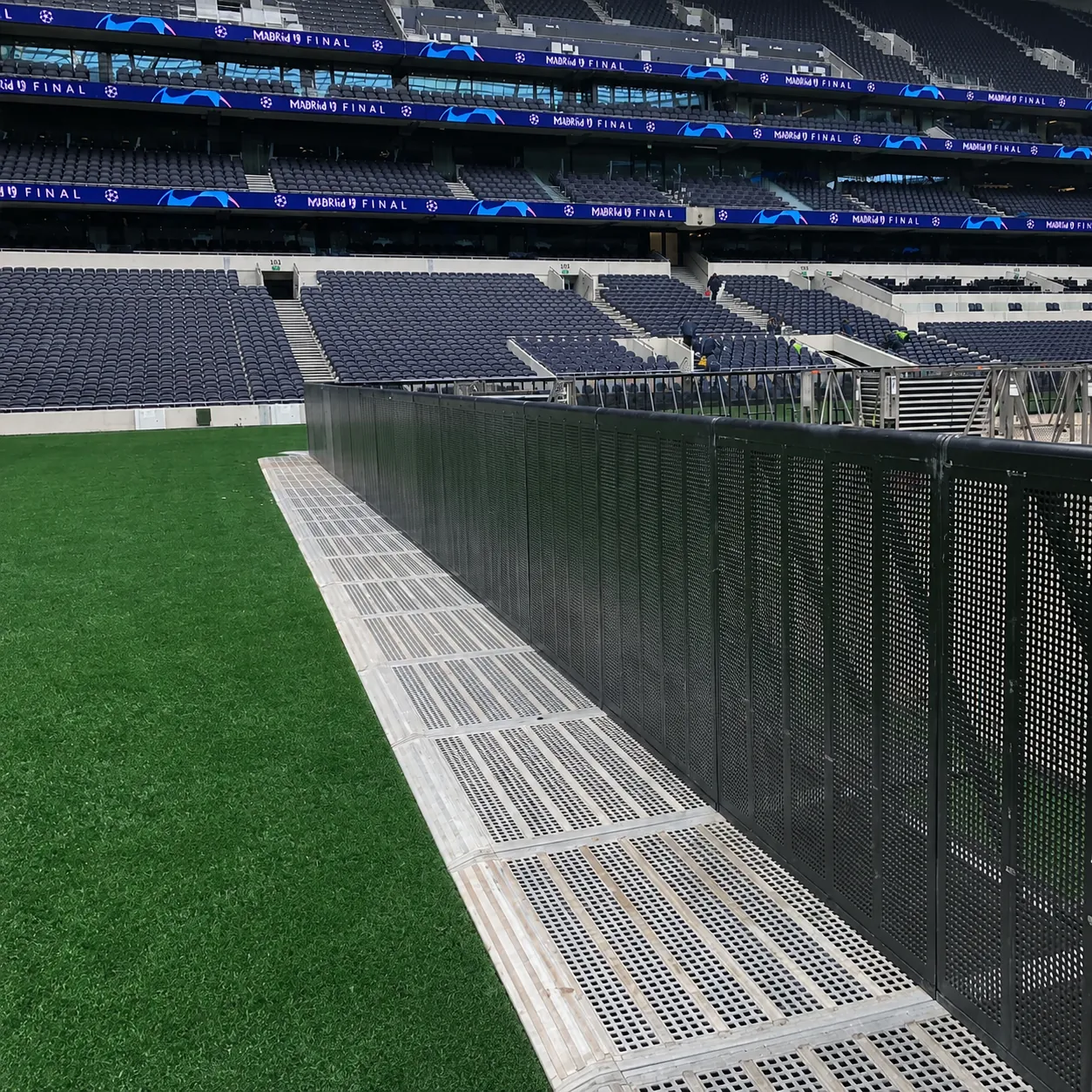
The top of the barrier is rounded for the comfort of the people in the front row, who may lean on it for a whole show.
Where two sections meet, the top rails close without pinch points, and crews can connect the sections without trapping their fingers.
The Snake Runner opens the barrier line for multicore cables up to 3.5 cm thick.
Access and exit
Five parts of the Mojo range manage access, exit and sightlines in a barrier line. Each sits at a point where people, vehicles or crowd pressure need to be controlled.
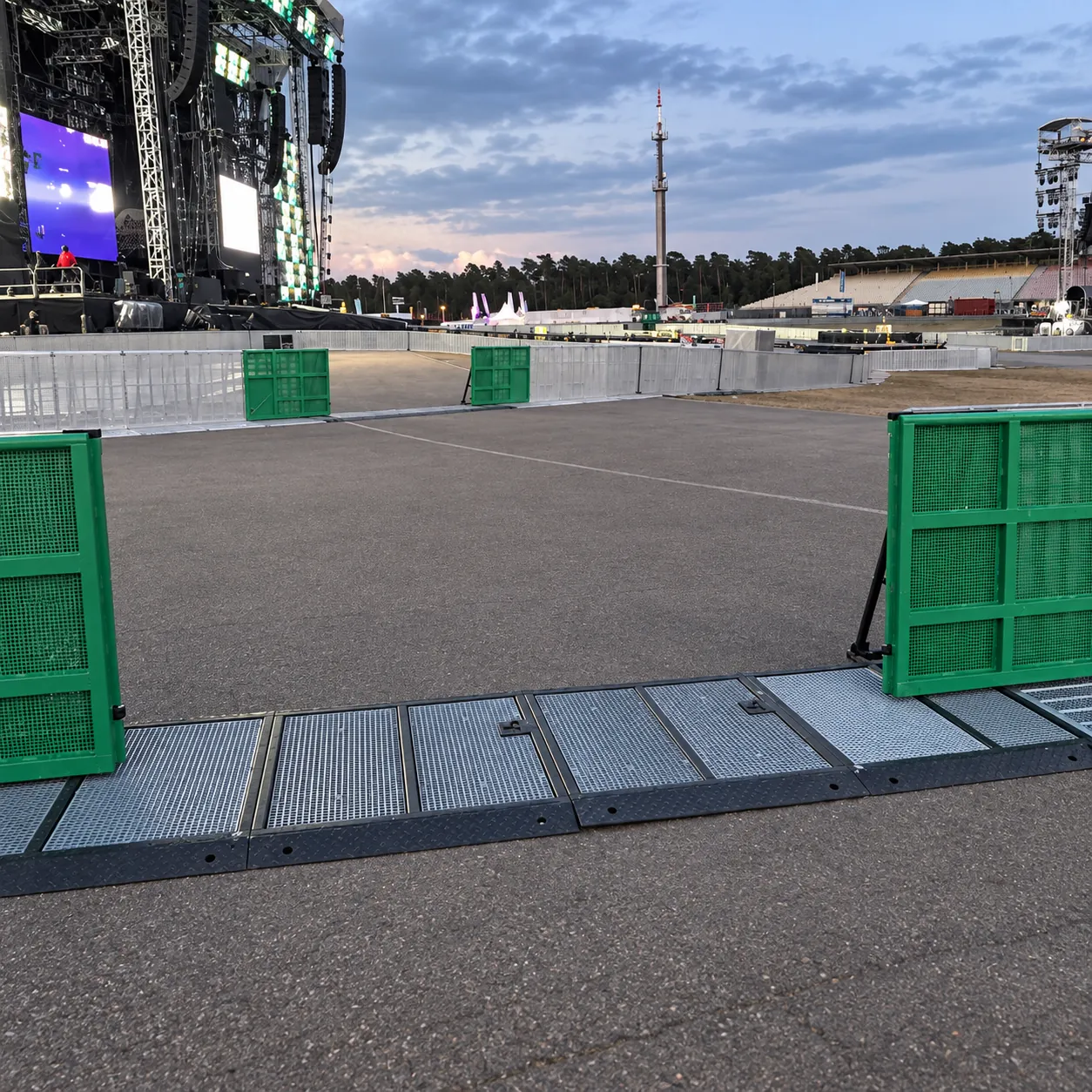
The Mega Exit is an emergency exit in the barrier line. It opens by hand with a single lever, and its two doors swing both ways, so emergency vehicles can drive through and the crowd has a wide way out.
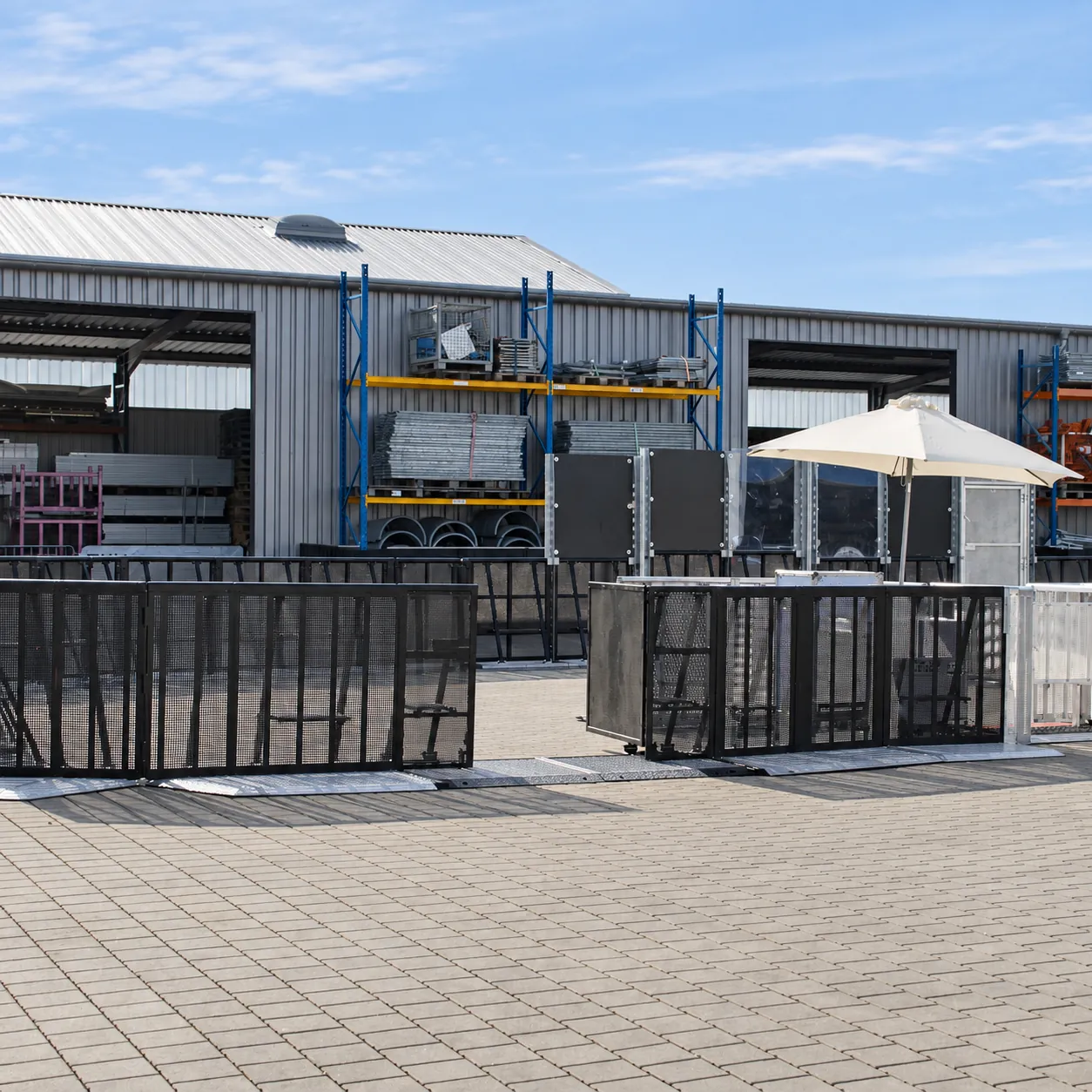
Alternative Doors give pedestrians, crew and most wheelchairs a way through the line. The door opens away from the crowd, and a cover over the lock means it cannot be operated from the front.
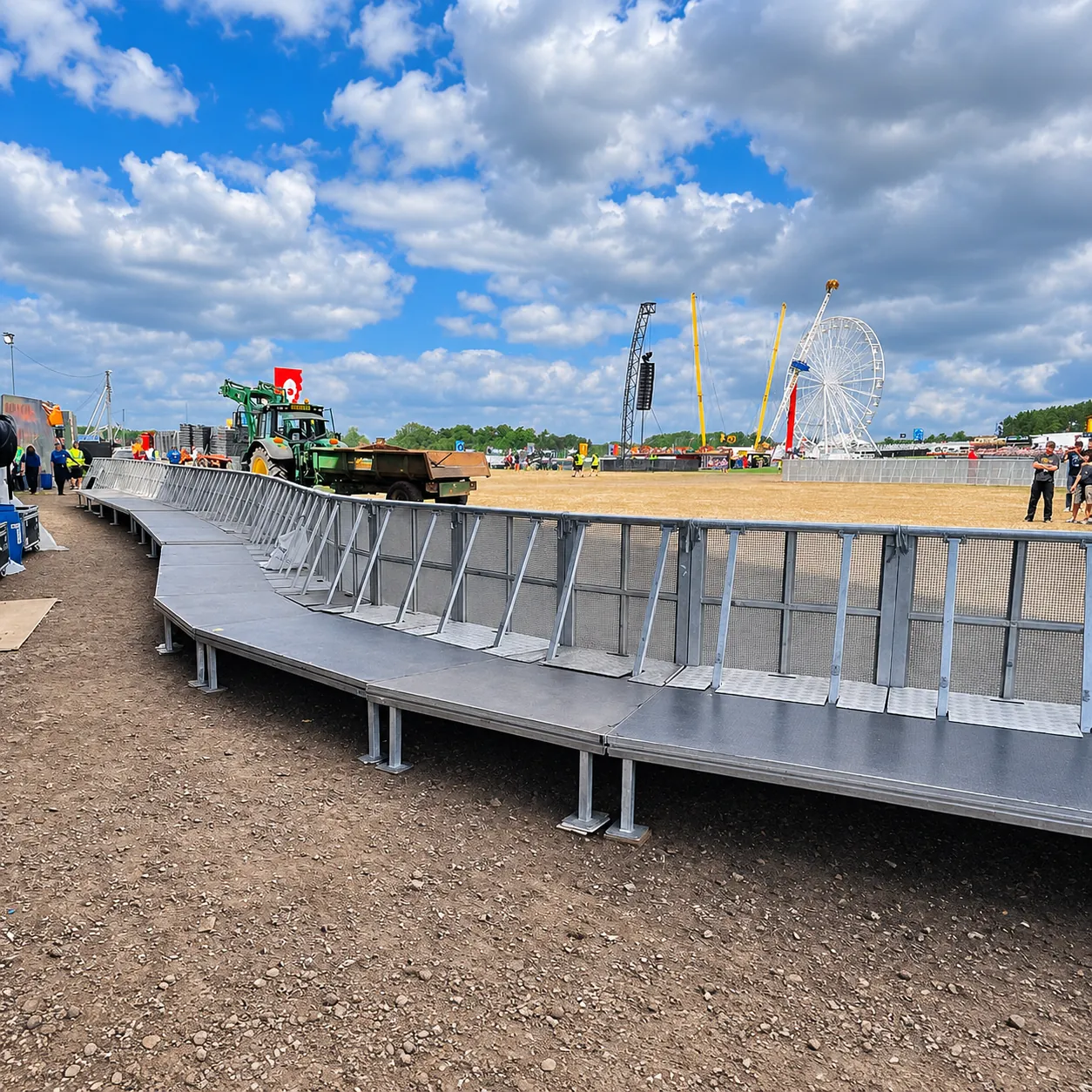
The security walkway is a raised working platform behind the barrier line, without gaps and corners included. Security and medical staff get a better view of the audience and better access to it.
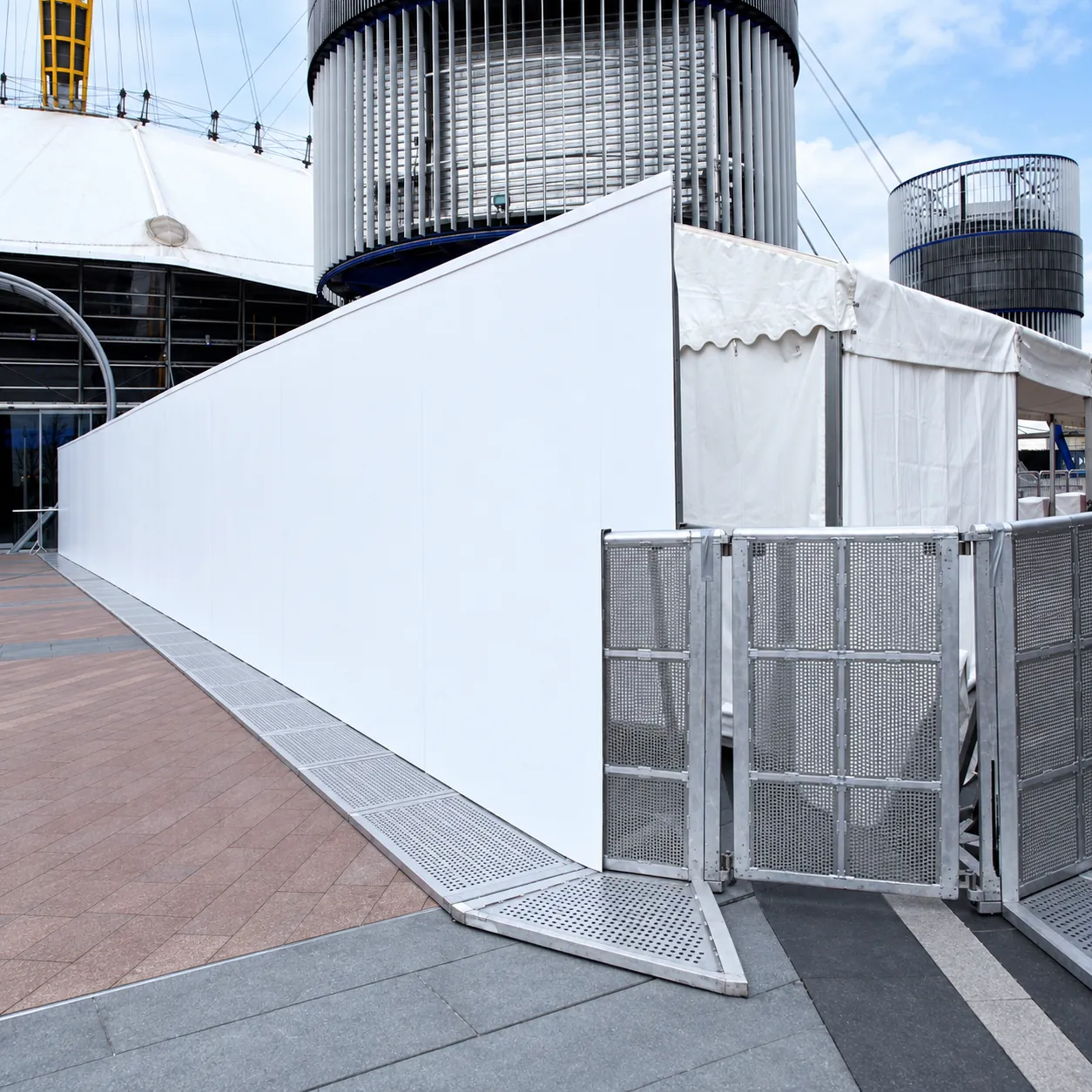
Sight screens on top of the barrier line are intended to block the view at chosen points, such as entrances, exits and the sides of the stage. A 5.5° wedge lets the line curve gradually around the stage.
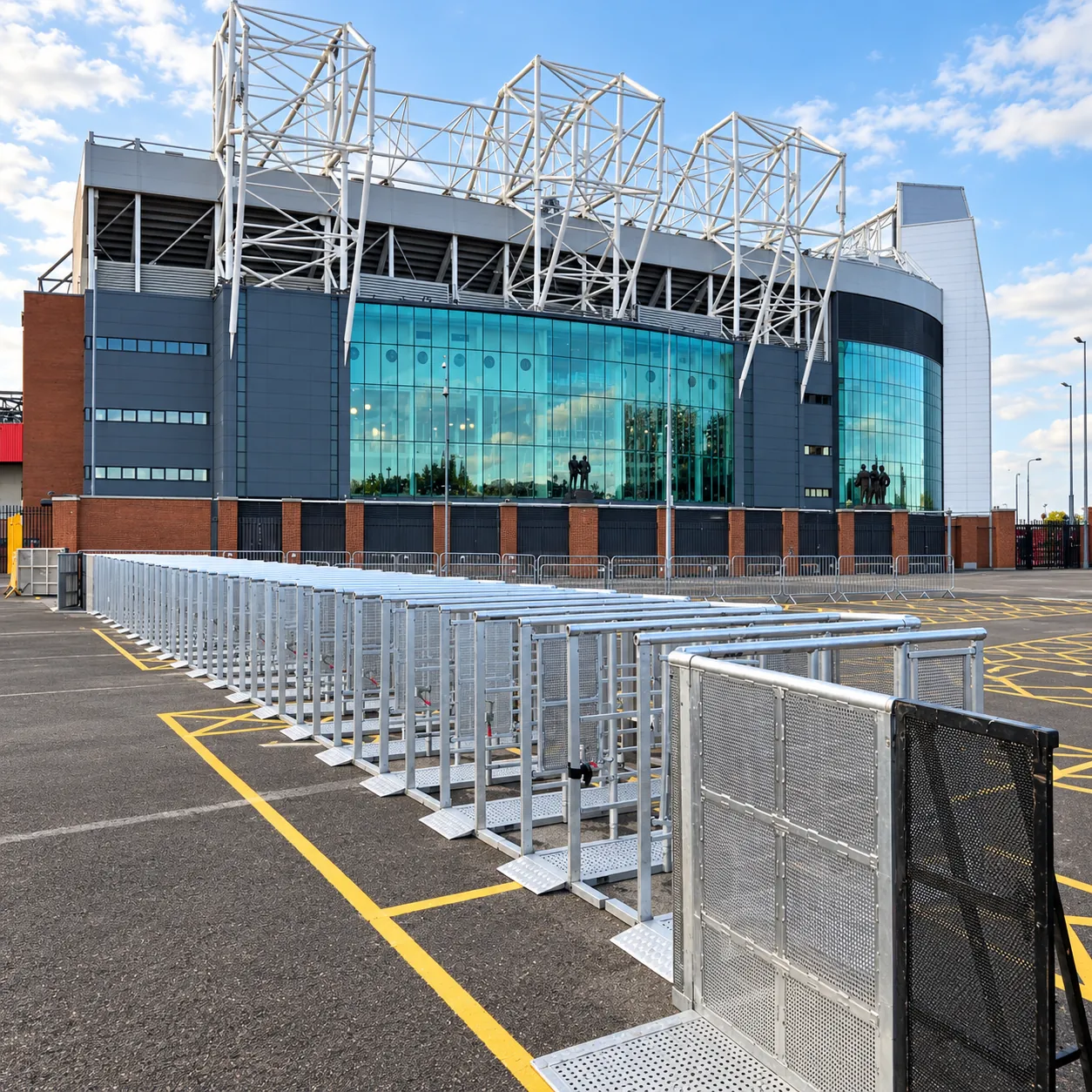
The Line-up Gate turns an entrance into queuing lanes with room for security checks and tickets. A front bumper with a security step lets staff oversee the queue.
Testing
Each part is developed with engineers and tested for strength, slip resistance and handling before it is introduced. Mojo Barriers BV develops its barrier systems and has had them independently tested since 1996. Certification is carried out by independent bodies such as TÜV NORD.
In 2025 TÜV NORD Nederland certified four elements of the Mojo Barrier G3 to 5 kN/m under the Institution of Structural Engineers' guidance for temporary demountable structures, which organisers, authorities and suppliers use for temporary stands, stages and barriers. In use, the barriers are checked by hand before and after every event.
At the event
The barrier layout is planned early, together with the organiser and the other parties on site. That planning is part of the Mojo Barriers crowd control approach.
The barrier crew works to the site induction and the house rules of the venue, as at the Westfield Stratford City launch in 2011. Tools and transport travel with the barriers.
Where the Barrier Load Monitor System is in use, it shows the pressure on the barrier line in real time. The idea comes from Mojo Barriers’ crowd pressure research.
The barrier crew arrives last and leaves first. The barriers are in everyone’s way, yet they stay for safety, so the crew stays in close contact with the production.
At Reading and Leeds in 2011, a new front-of-stage configuration followed the analysis of previous years, to reduce sideways waves in the crowd.
FAQ
Mojo Barriers passes its barrier knowledge on in four stages:
| Stage | What happens |
|---|---|
| Briefing | Project managers visit tours on the road and brief the touring and local crews. |
| Supervision | Major events and festivals are coordinated by supervisors trained by Mojo Barriers. |
| Training | Local teams learn to set up and dismantle the barriers safely, for example the staff of The O2 in London and the new partner in Indonesia in 2016. |
| Hand-over | Trained crews work on their own: the Squamish Valley Music Festival team, trained in 2014, set up the barriers itself in 2015. |
Touring crews that know the system can also work without a Mojo Barriers supervisor, as the AC/DC crew did in 2015.
The Gatekeeper is a turnstile that can be combined with the Mojo Barrier system:
No. The Bar Barrier is made for bars and sales counters and is not to be used as a crowd control barrier system. Where crowds press against the line, the aluminium Mojo Barrier sections and the safety features in the line are the right choice.