Development & research
Crowd barrier research
and development at Mojo Barriers
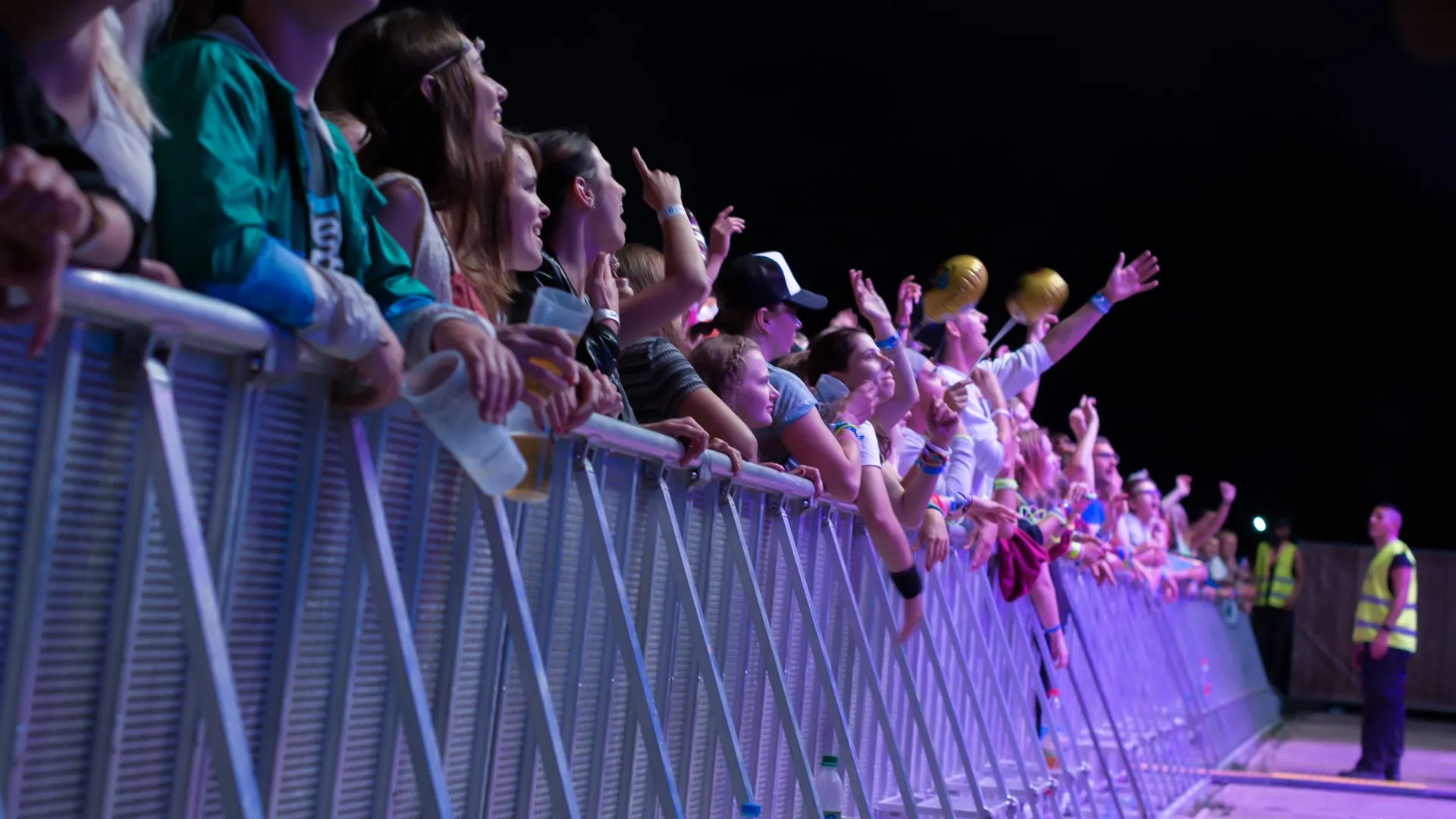
Mojo Barriers BV develops its barrier systems, measures how crowds load them at live events and has them independently tested.
Field measurement
How the Barrier Load Monitor System
measures crowd pressure
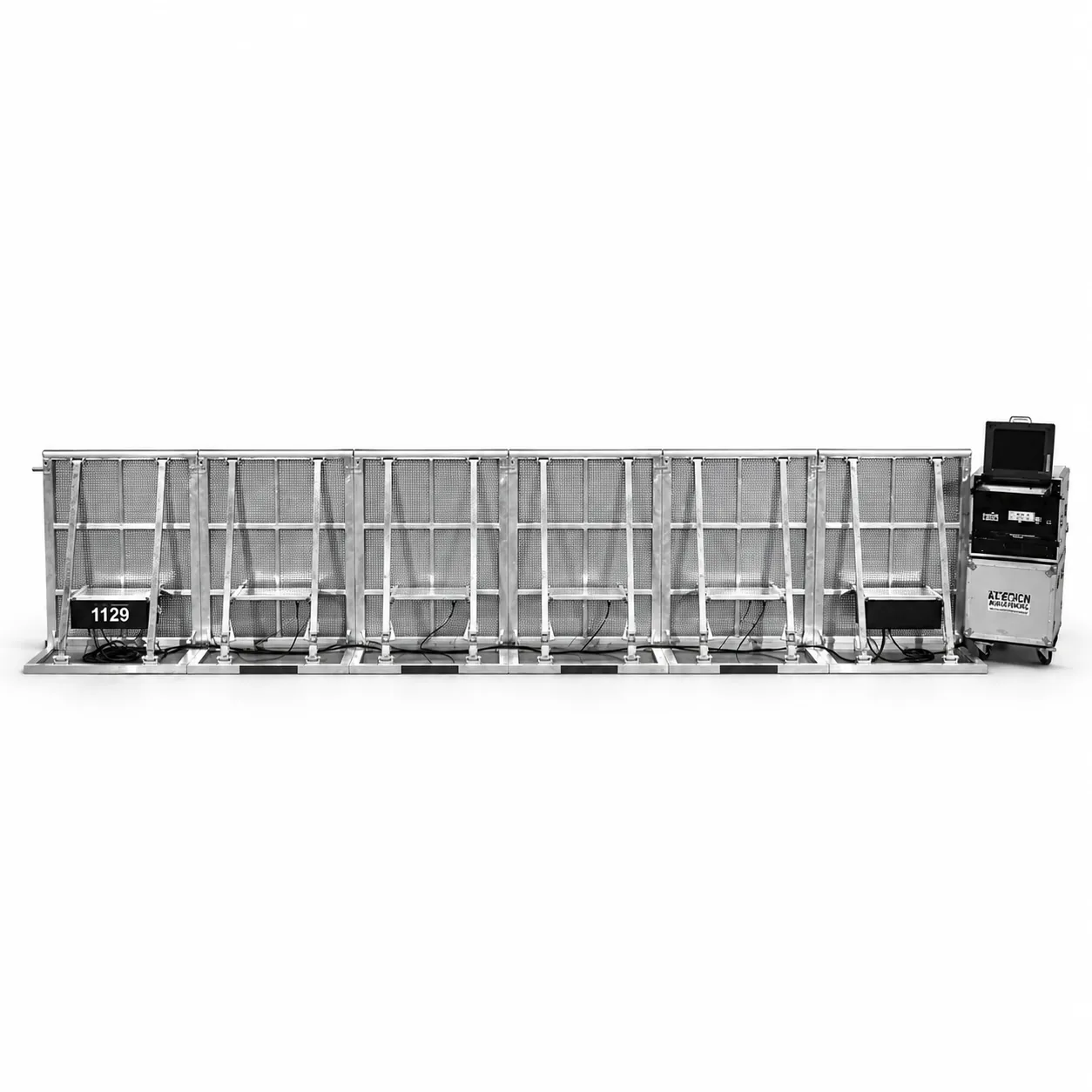
The Barrier Load Monitor System (BLMS) measures the pressure a crowd puts on a barrier line. Pressure sensors sit in the braces of each sensor barrier and are linked to on-site computers running proprietary Mojo Barriers software, so crowd management teams can spot pressure hotspots as they develop.
- The sensors are integrated into the straight section, so no extra barrier elements are needed.
- Sensor barriers can sit side by side for continuous coverage or be spread as single modules along the whole line.
- BLMS has been used at festivals including Lowlands, Roskilde, Leeds, Reading and Rock Werchter.
Crowd science
What crowd dynamics research
looks at
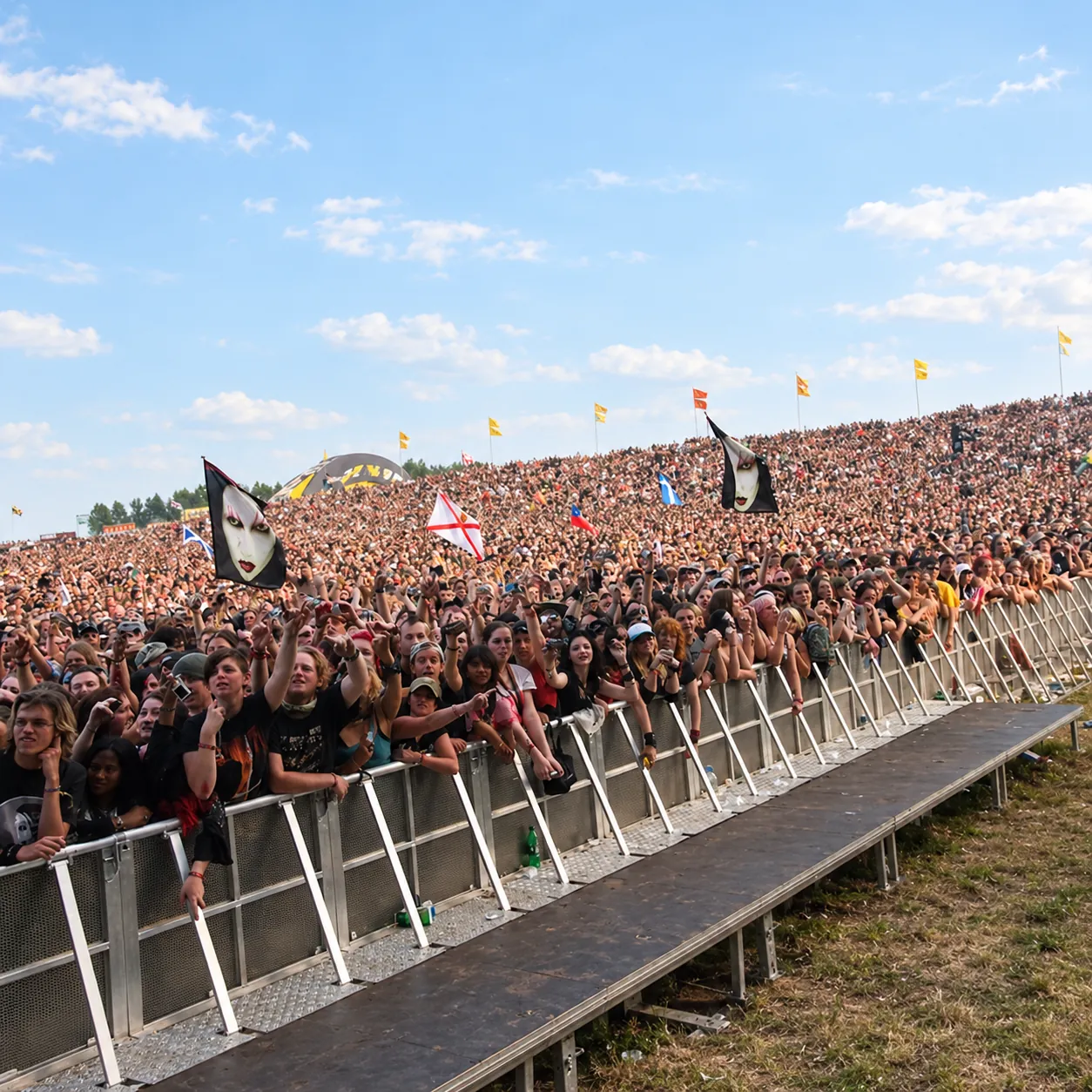
Crowd dynamics research studies how pressure and movement spread through a dense crowd, for example when an audience pushes towards the stage at a concert. Mojo Barriers approaches crowd safety research from the barrier side: how crowd pressure reaches the front-of-stage line.
In 2006 Mojo Barriers began to correlate the measured pressures with factors such as the band on stage, the gradient of the site and the barrier design.

Development milestones
Milestones from decades
of barrier development
1998
Aluminium barrier
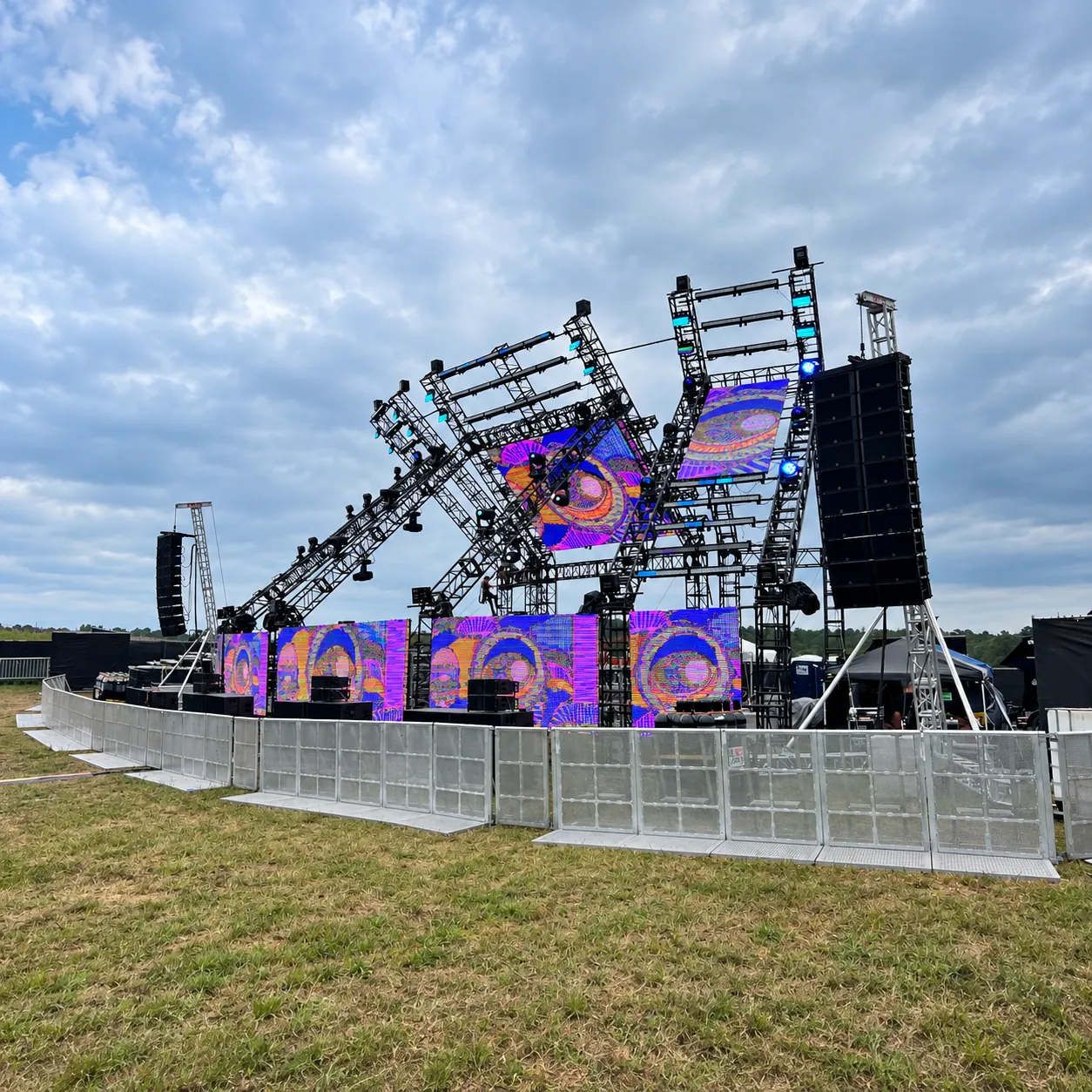
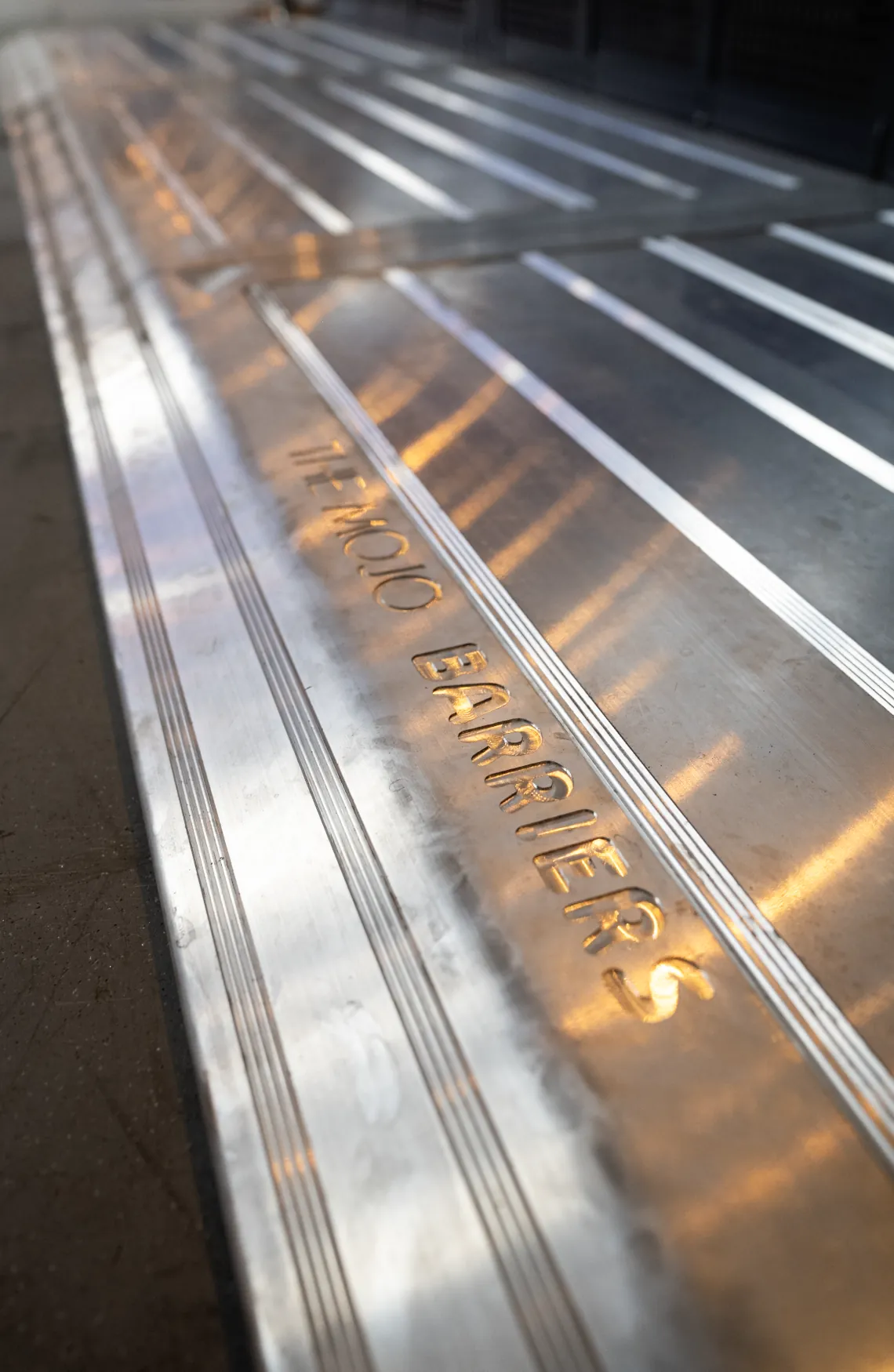
In 1998 the barrier moved from steel to aluminium. In 2005 the aluminium Mojo Barrier® was shown in the MoMA exhibition “SAFE: Design Takes On Risk”.
2005
Barrier Load Monitor System
Developed in 2005 to measure the pressure a crowd puts on sensor-equipped barrier sections at the front of stage.
2009
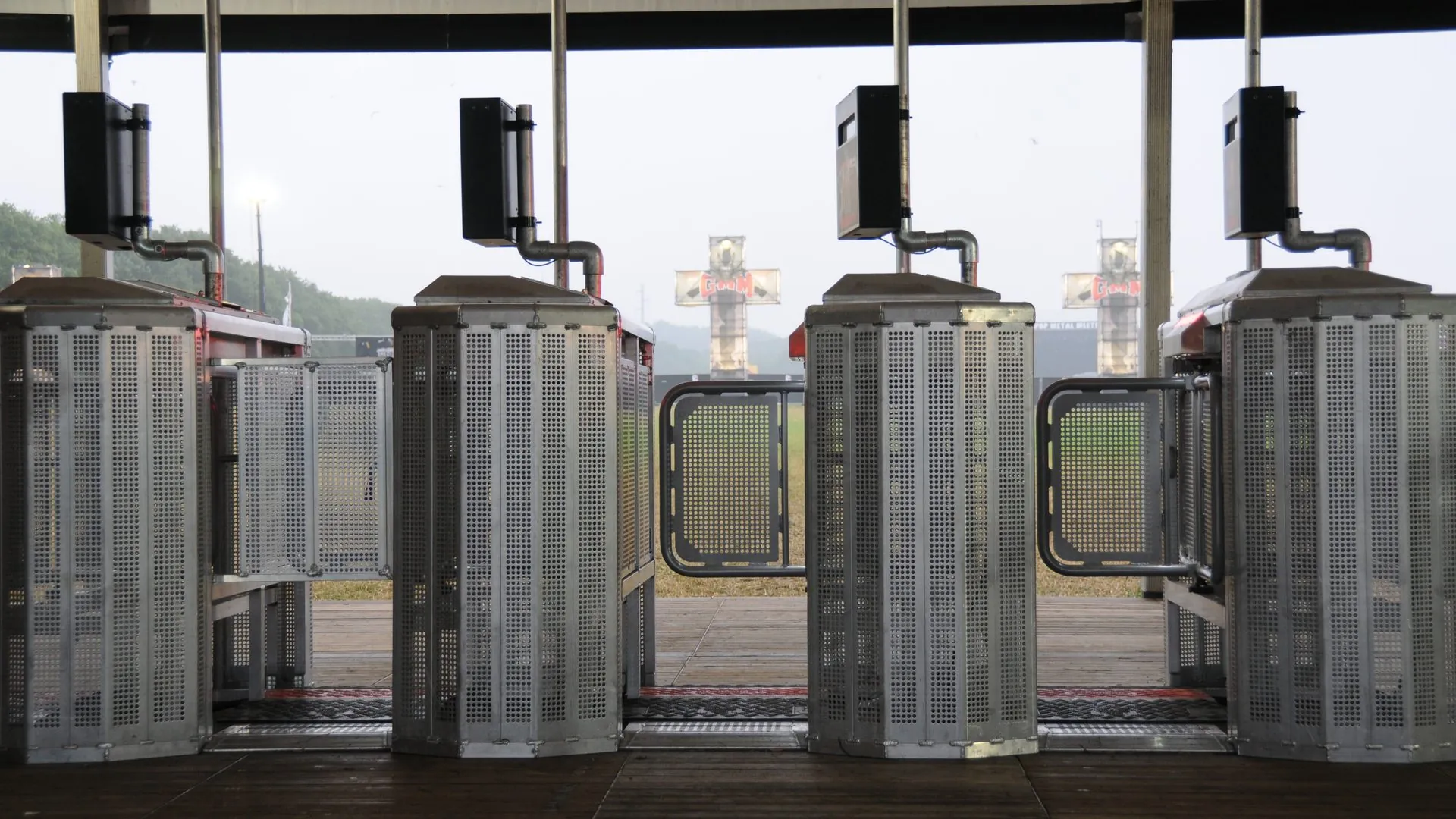
Gatekeeper
Mojo Barriers introduced the Gatekeeper entrance system in 2009 and followed it with Gatekeeper 2.0 in 2013.
Independent testing
Independent load and strength tests
by TNO
TNO Building and Construction Research, part of the Netherlands Organisation for Applied Scientific Research, documented two load tests on Mojo barriers in the 1990s.
Report 96-CON-R0748, dated 11 May 1996, covers Mojo barriers dating from 1990 and 1992, tested for strength, overturning resistance and sliding behaviour. Report 98-CON-R0777, dated 12 April 1998, is a strength test of a prototype aluminium Mojo barrier from the year the aluminium system was developed; its sliding behaviour did not differ significantly from that of the original steel barriers.
In the field
Where Mojo barrier systems
have been used
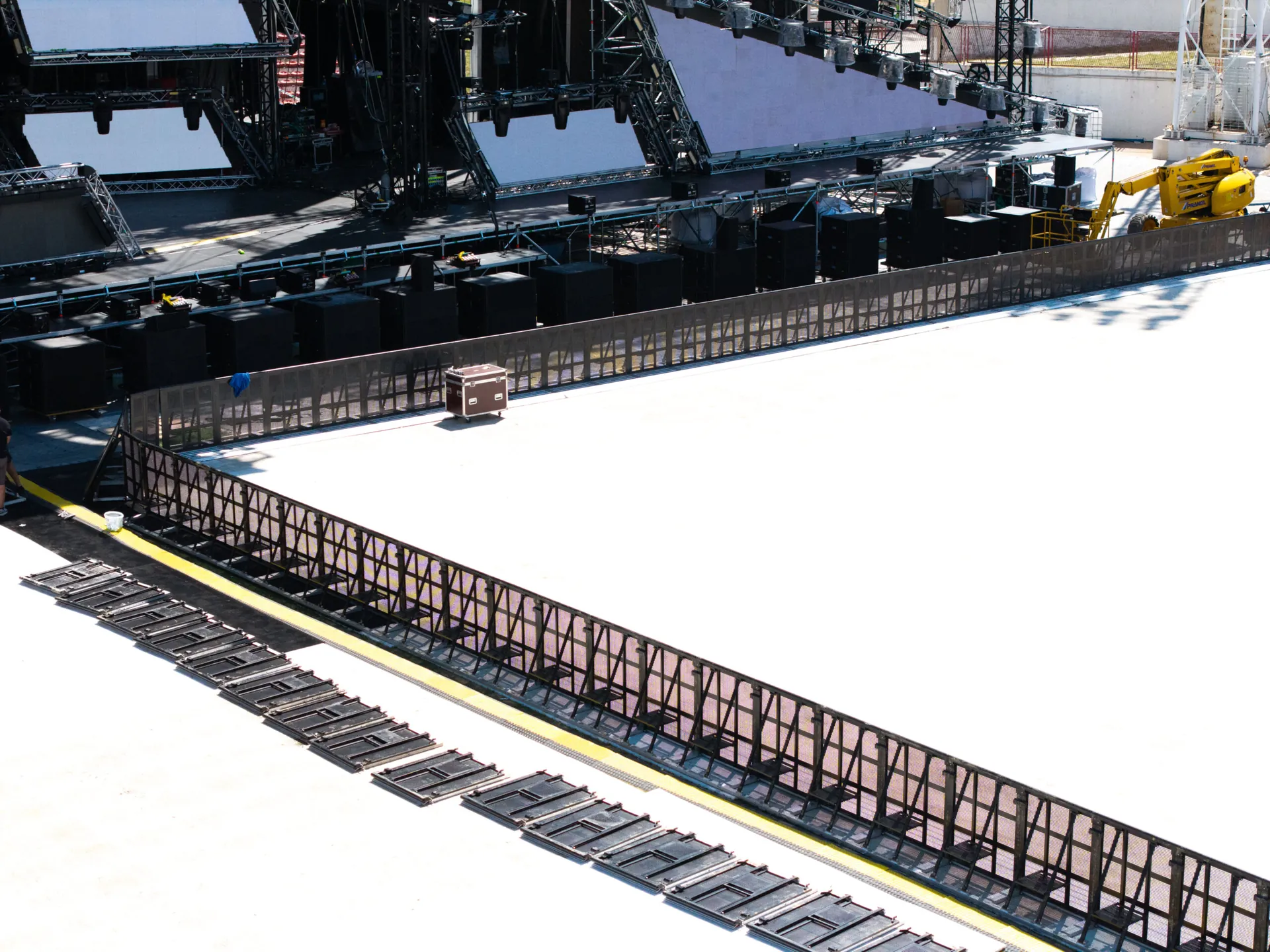
Mojo barrier systems have worked at festivals, sporting events and summits, from front-of-stage lines to perimeter fencing.
- Carling Leeds and Reading Festivals, 2006: more than 1,000 m of barrier across both sites, including a new secondary barrier line between the front-of-house mixer and the stage
- London 2012 Olympics
- G20 summit, Brisbane, 2014: 2,500 m of Mojo High Fence in three months, developed to a specification from police and government officials
- Roskilde Festival, 2016: a three-year contract with Mojo Barriers
- Glastonbury Festival, 2017
- Sydney Opera House, 2017, with Mojo High Fence

Next step
Plan your next event
with Mojo Barriers
Mojo barriers are rented through MOJO Rental and other group companies, so start with the rental partner for your country.