Fencing, monitoring and security
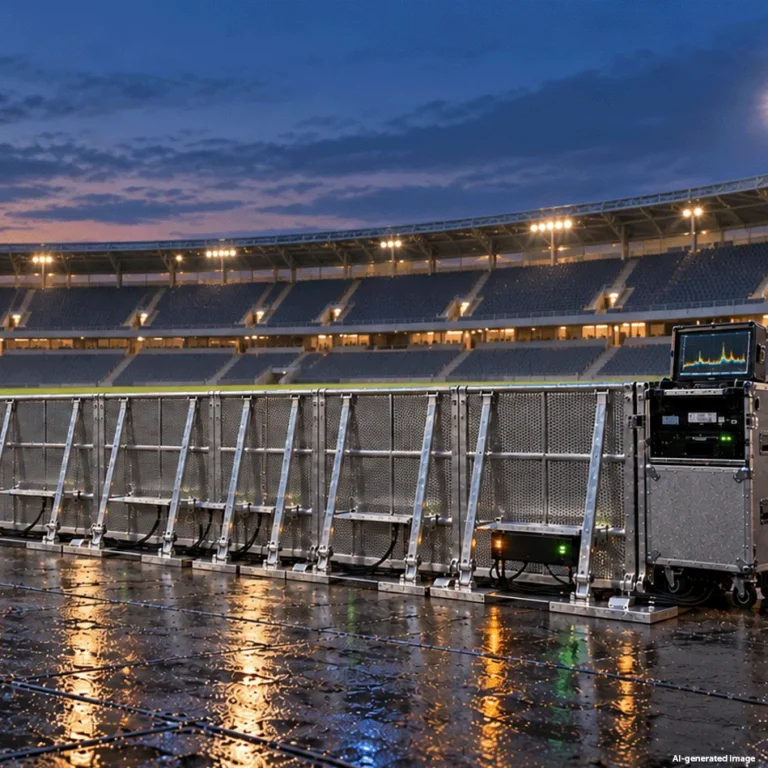
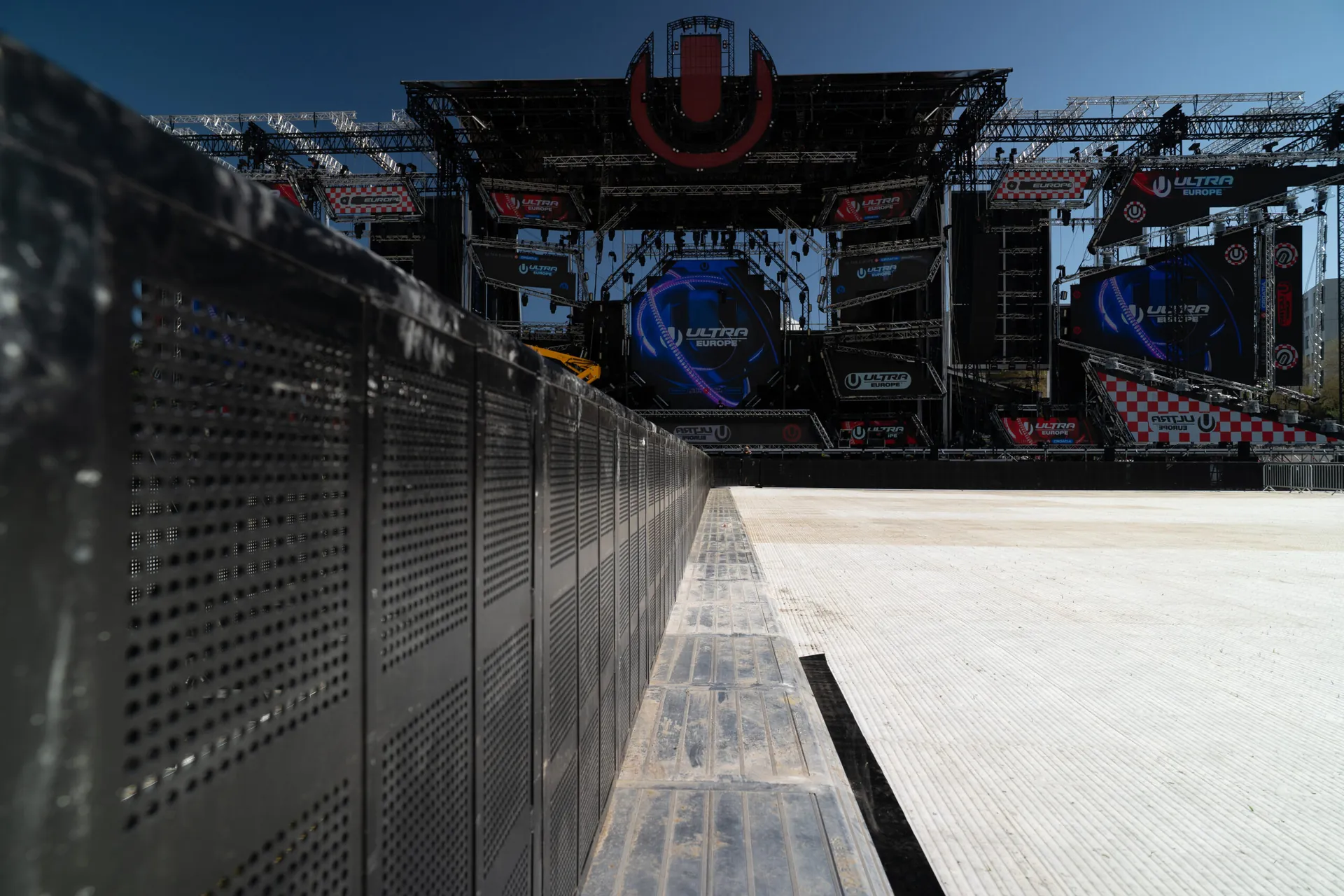
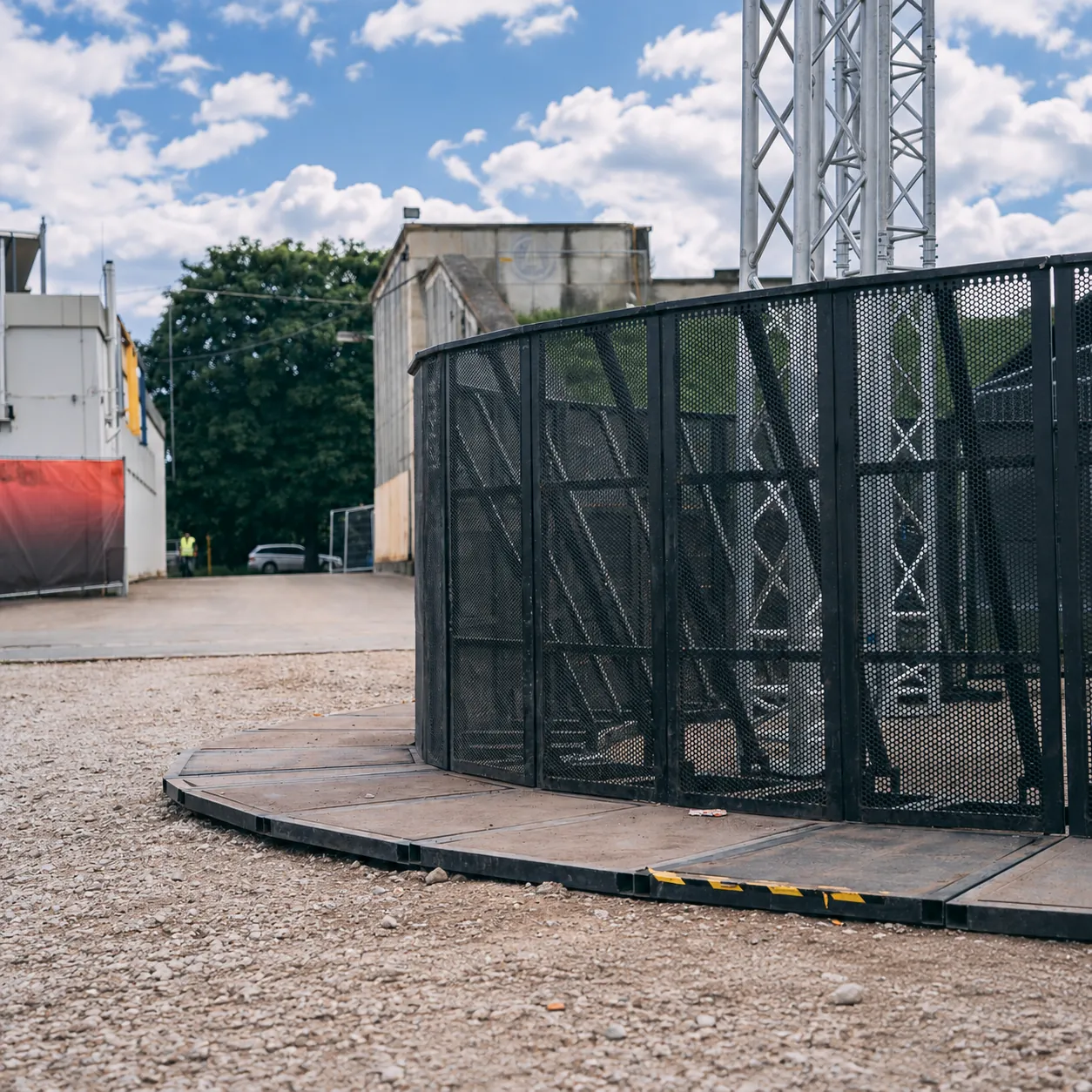
Three special systems around the Mojo Barrier® line. The 2.40 m Mojo High Fence closes off restricted areas and walkways, the Barrier Load Monitor System (BLMS) is a crowd monitoring system that shows the pressure on the barrier in real time, and the Security Features block sightlines, add a raised walkway and curve the line.
Monitoring and screening
The Barrier Load Monitor System turns the barrier line itself into a measuring point: sensors in the braces of the Straight Section record the pressure of the crowd, without extra elements in the line. The Security Features change what the crowd sees and where staff stand behind the line.
The systems

Monitoring
Used at festivals such as Lowlands, Roskilde and Rock Werchter; the recorded data gives insights for the barrier layout at the next edition.
Add-ons
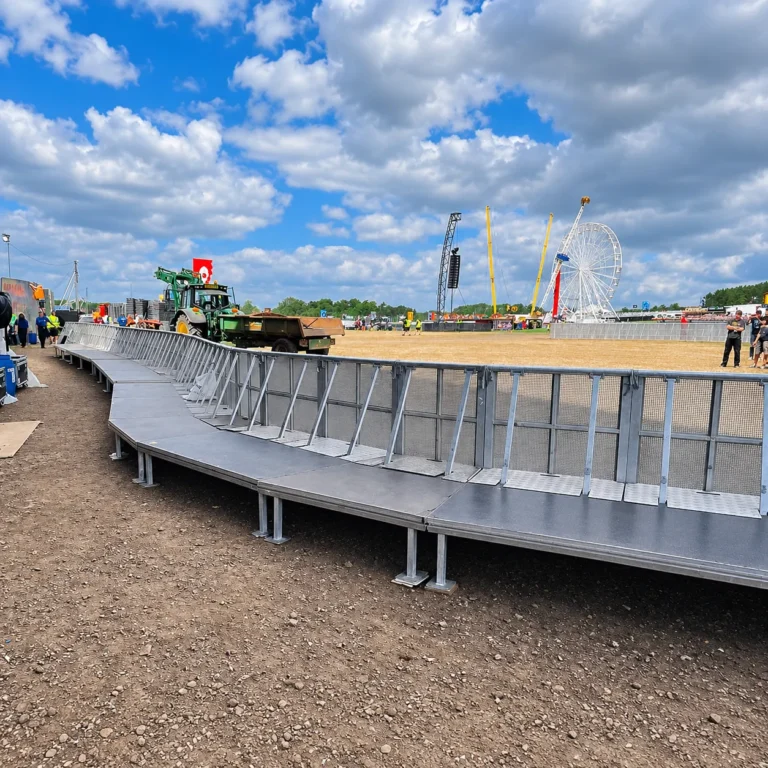
For entrances and exits that must stay clear for the flow of visitors, long stage fronts that need a gentle curve, and places where security and medical staff work behind the line.
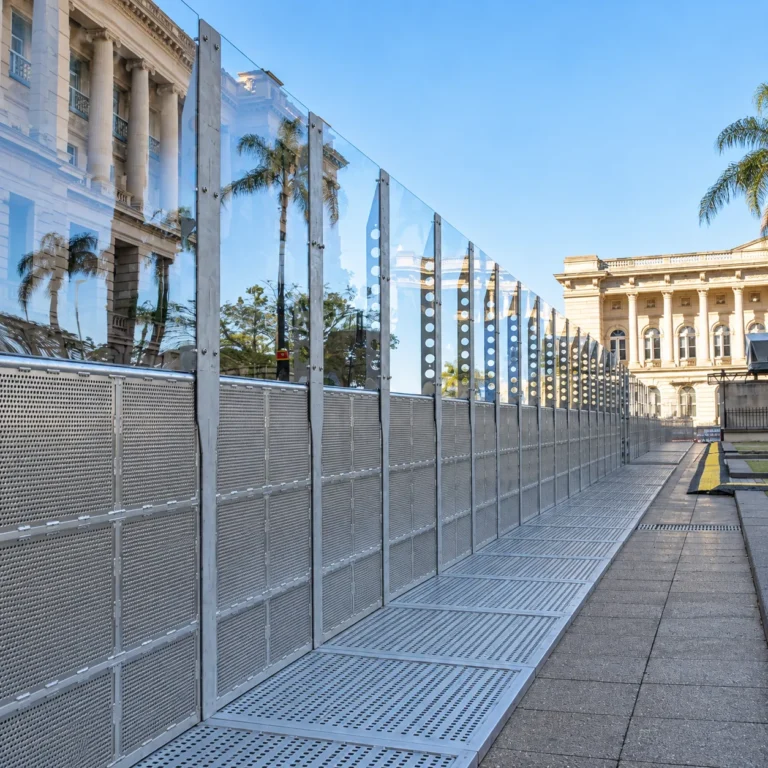
Perimeter fence
Each section is a reinforced aluminium barrier carrying a robust, impact-resistant 9.5 mm polycarbonate upper panel.

How they connect
One controller takes up to 10 sensor barriers, which can sit side by side or be spread along the line, and the walkway follows the whole line, corners included. Values can vary slightly between production series.
FAQ
Two contacts, depending on the question:
The BLMS measures the force a crowd puts on the barrier, not the number of people in front of it, and it does so where crowd pressure is usually highest: the barrier line in front of the stage.
| Point | Barrier Load Monitor System |
|---|---|
| Measured | Crowd pressure on the barrier line |
| Not measured | Crowd density or how many people are present |
| Readings | Shown live and kept as historical data for later analysis and research |
| Reporting | Detailed reports after data analysis, optional |
Many crowd monitoring systems for crowded places and public spaces work with cameras, images and AI or computer vision to estimate crowd density. The BLMS uses a different technology and no cameras: pressure sensors in the barrier itself measure the force of the crowd directly, and the data processing runs on on-site computers. It records force readings, not images of any person, so there is no video surveillance involved.
The readings support decisions during and after an event:
The integration is part of the line itself, as the sensor barriers take the place of normal sections:
Besides Lowlands, Roskilde and Rock Werchter, it has run at Leeds and Reading Festival. Mojo Barriers BV developed the system in 2005; two years later, a research programme with Bucks New University started at Roskilde Festival.
Each of the three parts has its own task on the barrier line:
The standard upper panel of these temporary fencing panels is polycarbonate, with plywood as an alternative:
Black or white panels block the view into an area; transparent ones keep it open.
Yes, the Mojo High Fence line can follow uneven ground:
Only the 5.5° wedge has its own test document: in 2011 Lloyd's British Testing recorded 7.66 kN/m against a required 5 kN/m to BS EN 13200-3:2005 (report 030611-SB01). The Mojo High Fence, the BLMS, the sightline panels and the security walkway have no separate certificate so far. All test documents are on the certification page.