Founded within a concert company
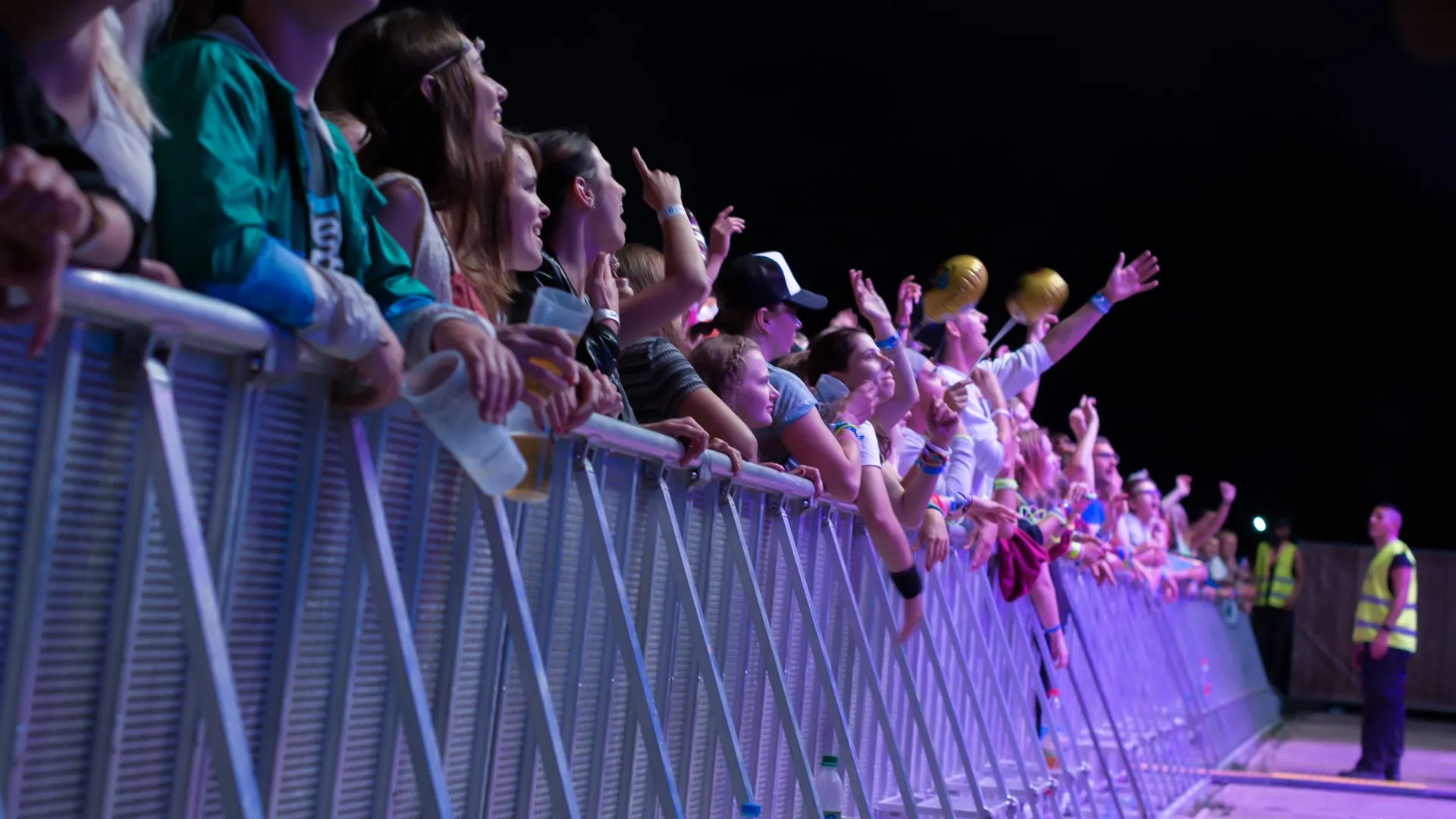
Mojo Barriers was set up within the Dutch concert company Mojo Concerts to manage concert crowds more safely.
History
Mojo Barriers BV has developed stage barriers since 1988: from the first steel barriers for Dutch concerts to today's aluminium Mojo Barrier® G3, in front of the stage at world tours, festivals and stadium shows.
Twenty five years ago Mojo Concerts realised the need to make events safer and developed the first ever stage barrier.
Timeline
Mojo Barriers started in 1988 inside the Dutch company Mojo Concerts, at a time when concerts had no barrier designed to hold back a pushing crowd. Our stage barrier history falls into six eras with three milestones each; for the company as it is today, read about Mojo Barriers BV.
Mojo Barriers was set up within the Dutch concert company Mojo Concerts to manage concert crowds more safely.
The first Mojo stage barriers were made of steel. Prince, U2 and The Rolling Stones soon used them at their concerts.
TNO tested Mojo barriers for strength, overturning resistance and sliding behaviour in 1996 (report 96-CON-R0748).
Mojo Barriers moved from steel to aluminium, with a barrier about 40 % lighter. TNO strength-tested a prototype in April 1998.
In 1998, the same year as the move to aluminium, Mojo Barriers opened an office near London in the United Kingdom.
In 2003, five years after the office near London, Mojo Barriers opened an office in Pennsylvania in the United States.
The Museum of Modern Art in New York showed an aluminium Mojo Barrier section in its exhibition “SAFE: Design Takes On Risk”.
With Bucks New University, Mojo Barriers began measuring crowd pressure at Roskilde Festival. More on our crowd safety research.
Mojo Barriers launched the Gatekeeper at The Event Show at Olympia London, a turnstile that counts visitors in real time.
Lloyd's British Testing tested Mojo corners, the Snake Gate and a wedge to BS EN 13200-3, and every element passed.
A new, lighter touring barrier debuted on Madonna's MDNA Tour, needing 20 % less truck space. An office in Sydney followed.
In 2013 TÜV Nederland load-tested the first and second aluminium generations, G1 and G2, at 5,000 N/m without defects.
At the 2015 Event Production Awards in London, Mojo Barriers was named Crowd Barrier Supplier of the Year.
At the Festival Supplier Awards, Mojo Barriers won Best Crowd/Pit Barrier for its configuration at BoomTown Fair 2015.
Mojo Barriers became part of an international group for event infrastructure, known today as the MOJO Holding Group.
The BRIT Awards every year since 2019 and over 100 projects at Tottenham Hotspur Stadium. More on the references page.
The G3 puts the focus on sustainability. It comes as Straight Section, Vario and Flex corners, and the Cable Gate.
TÜV NORD Nederland certified the G3 Straight, Vario, Flex and Cable Gate at 5 kN/m. Read more about the Mojo Barrier G3.
Since 1988, from steel to the third aluminium generation.
Tours, festivals, stadiums, sport and city events.
Germany, the Netherlands, the UK, Croatia, the US and Australia.
Europe, North America, and Australia and New Zealand.
2014
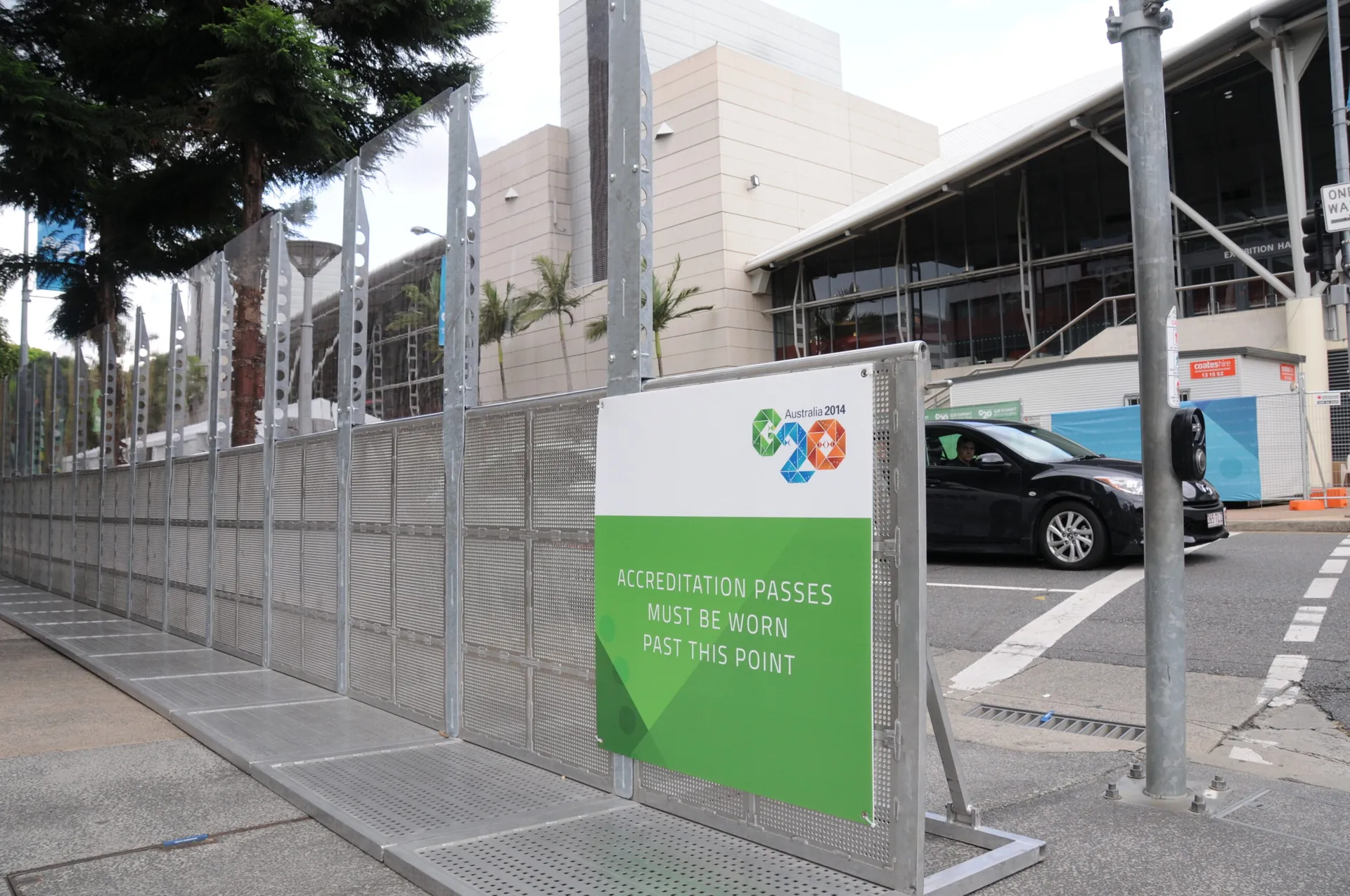
For the G20 summit in Brisbane in November 2014, Mojo Barriers developed the Mojo High Fence to a specification from police and government officials. Each self-supporting aluminium section is 1 m wide and 2.4 m high, with a transparent polycarbonate upper part, and more than 2,000 m of it was set up across the city.
The Mojo High Fence came to Europe in 2015, and in 2017 it was used at the Sydney Opera House.
2006–2026
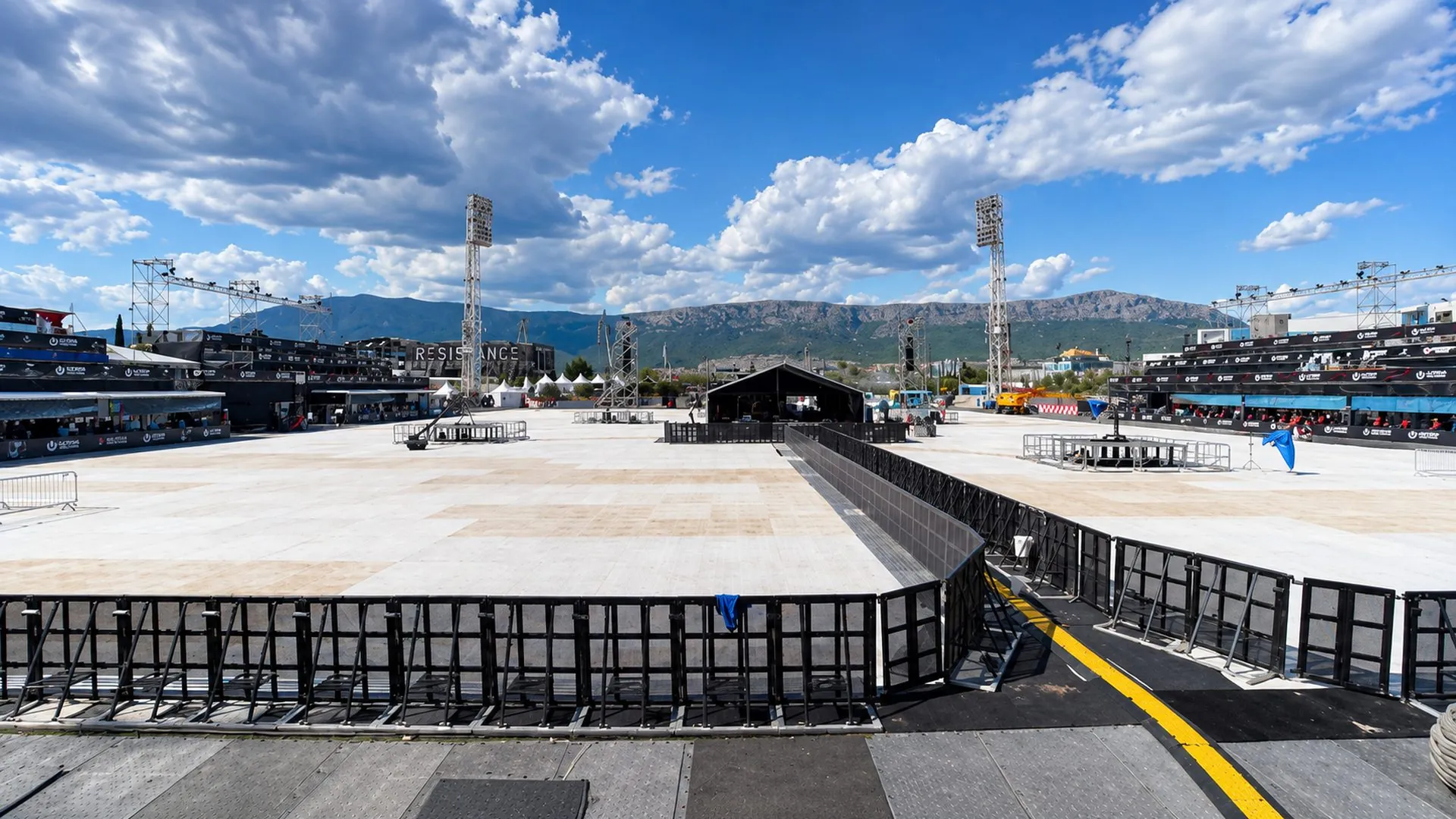
Mojo Barriers supplied 350 m of black aluminium barrier for the 17 European stadium shows of the A Bigger Bang tour.
Photo: example
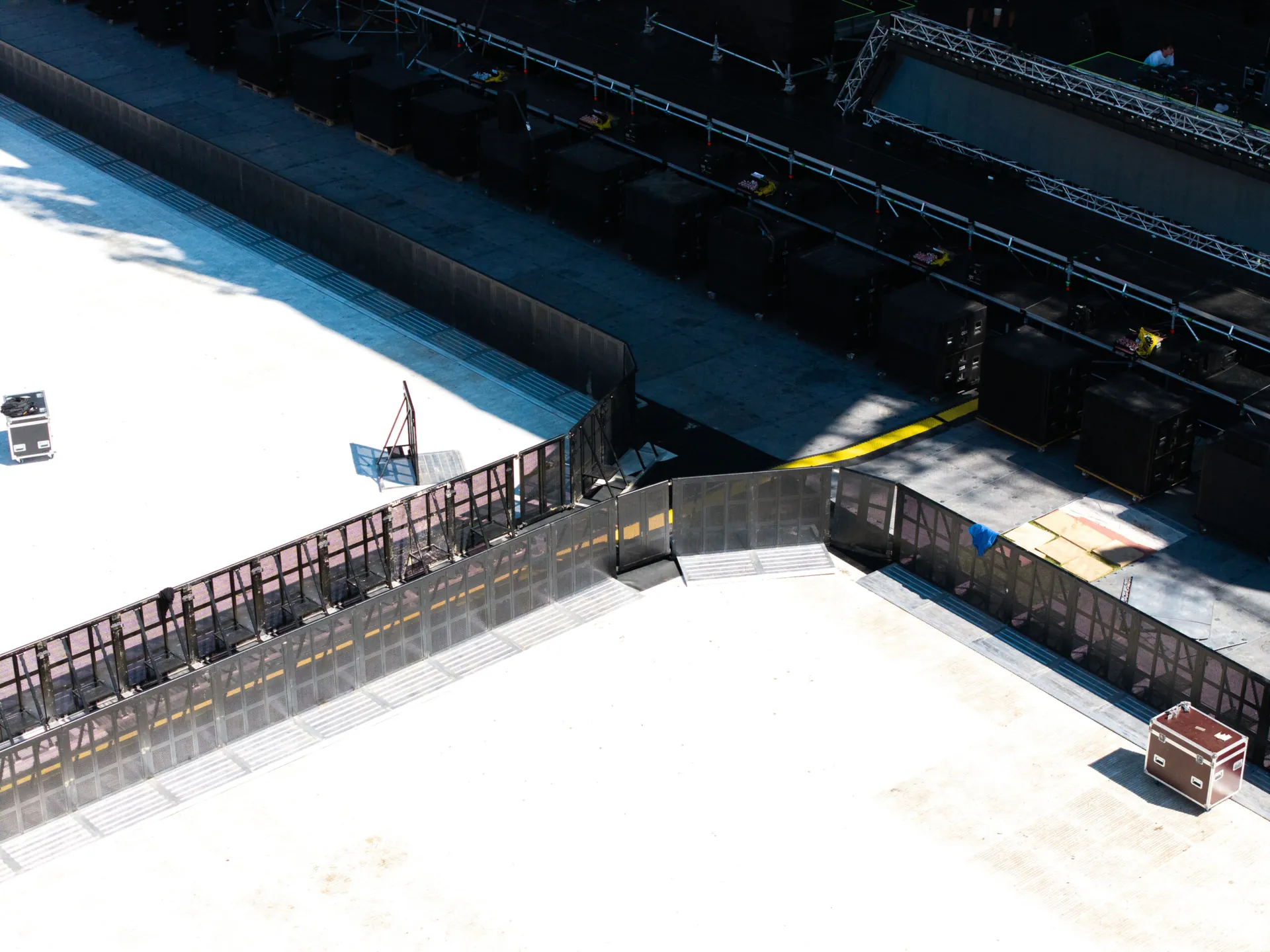
U2, an early user of the steel barriers, took Mojo Barriers on its 360° Tour.
Photo: example
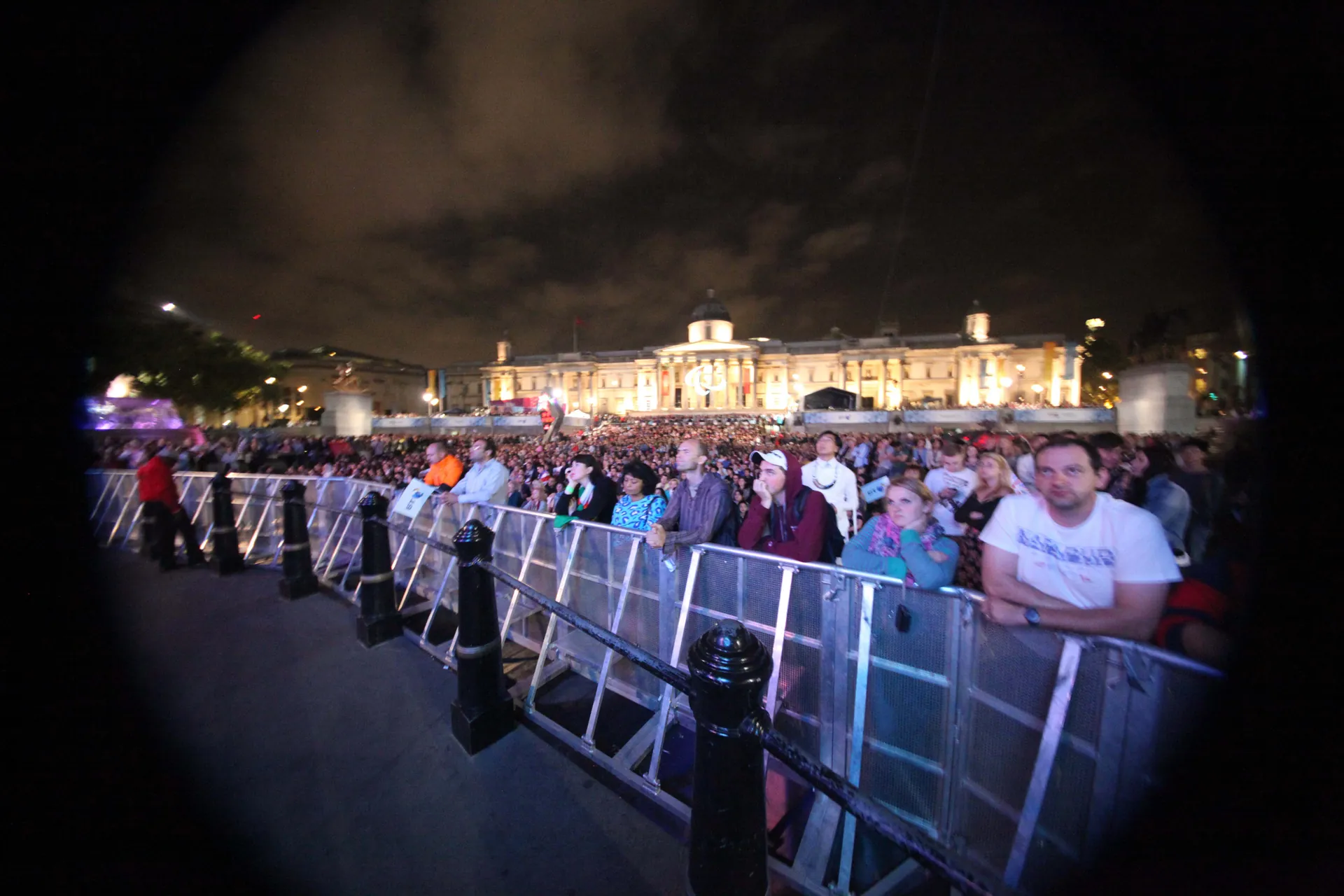
Mojo Barriers set up 700 m of barrier at each of three London train stations serving the Games, and 1,000 m across the three BT London Live sites.
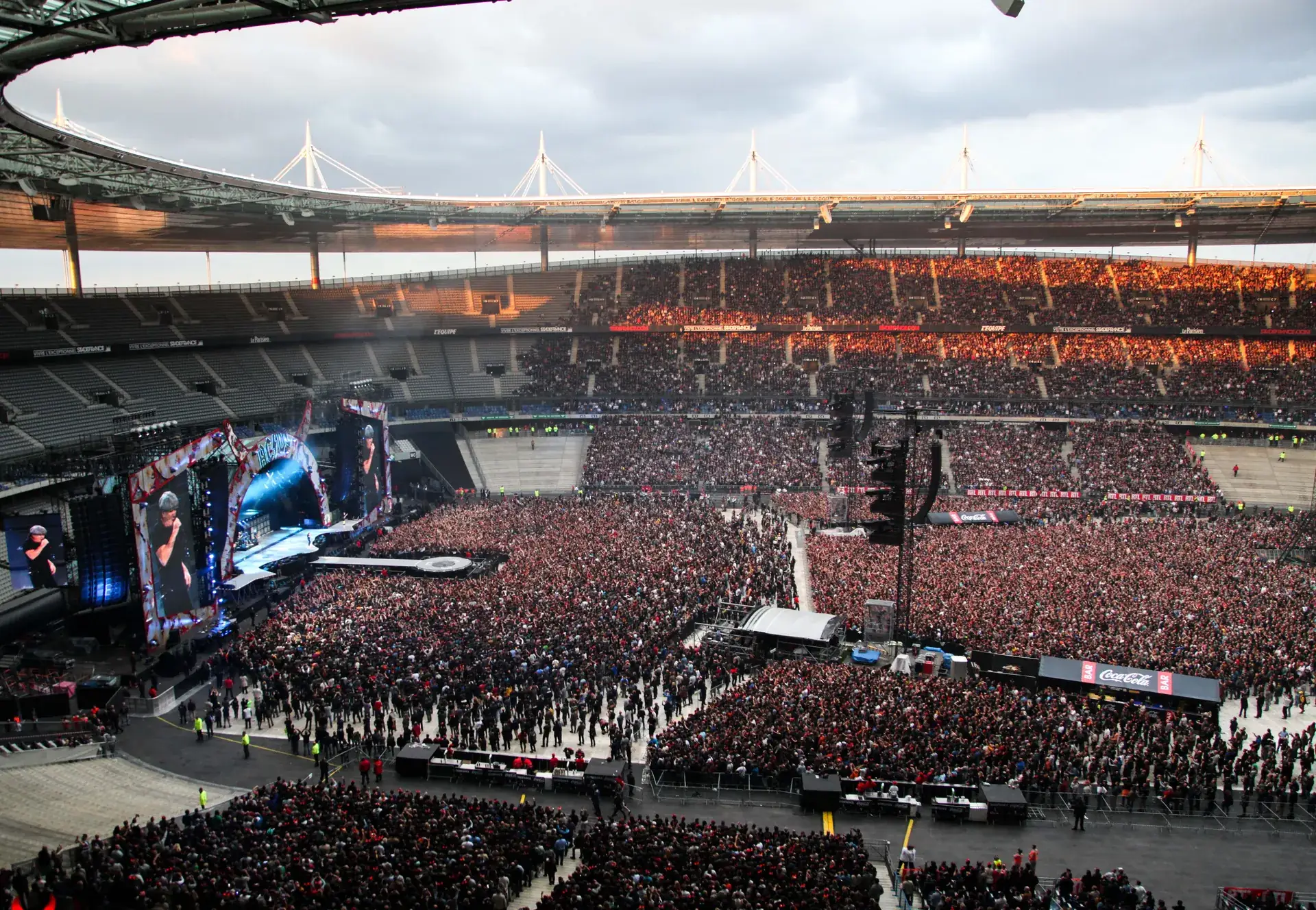
Mojo Barriers were used on Taylor Swift's The 1989 World Tour. In the same year AC/DC took them on the Rock or Bust tour.
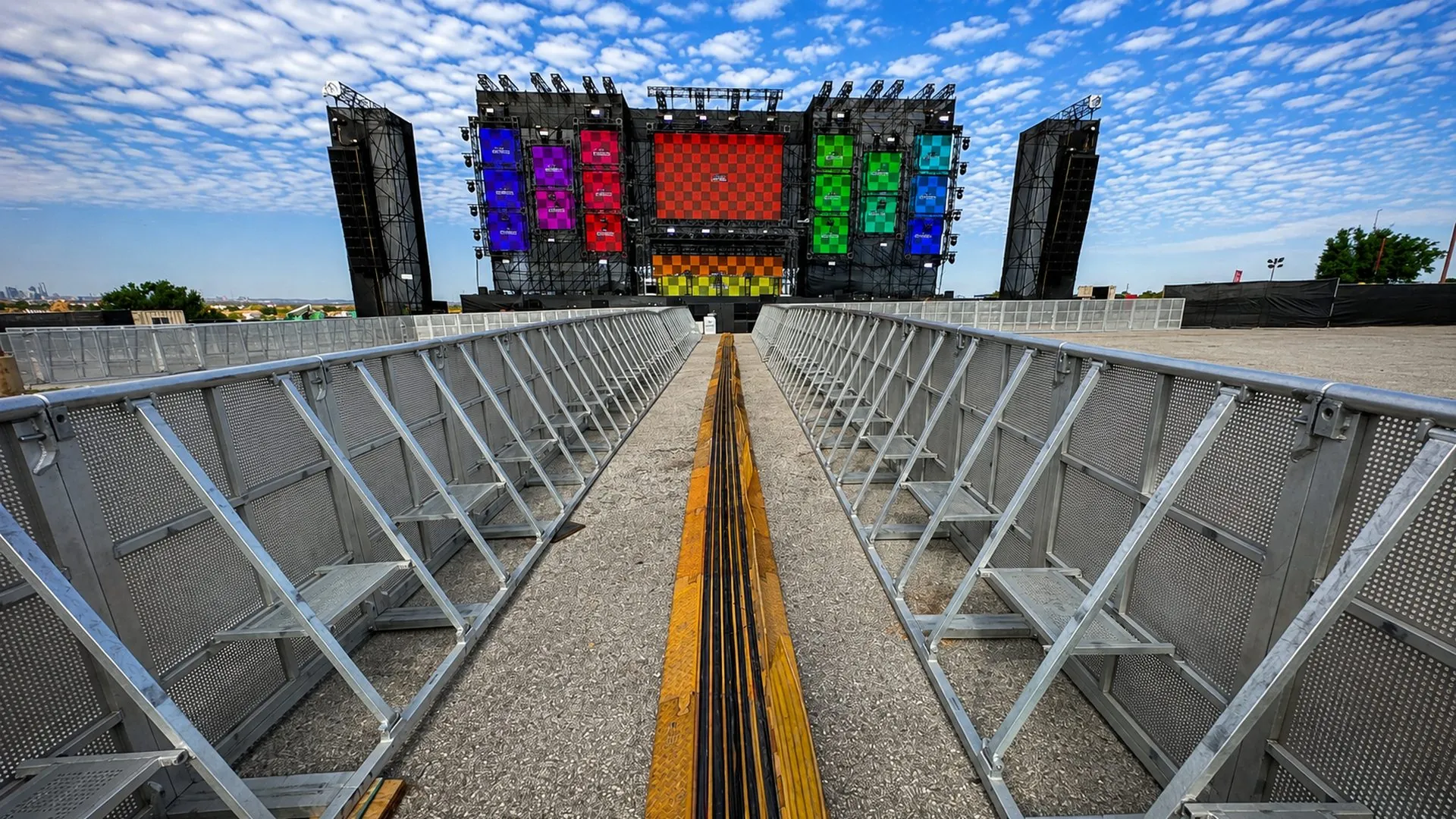
Mojo barriers stood in front of the stage for Coldplay and Ed Sheeran in 2022, The Weeknd in 2023, P!nk in 2024, and BTS and Bad Bunny in 2026.
Photo: example
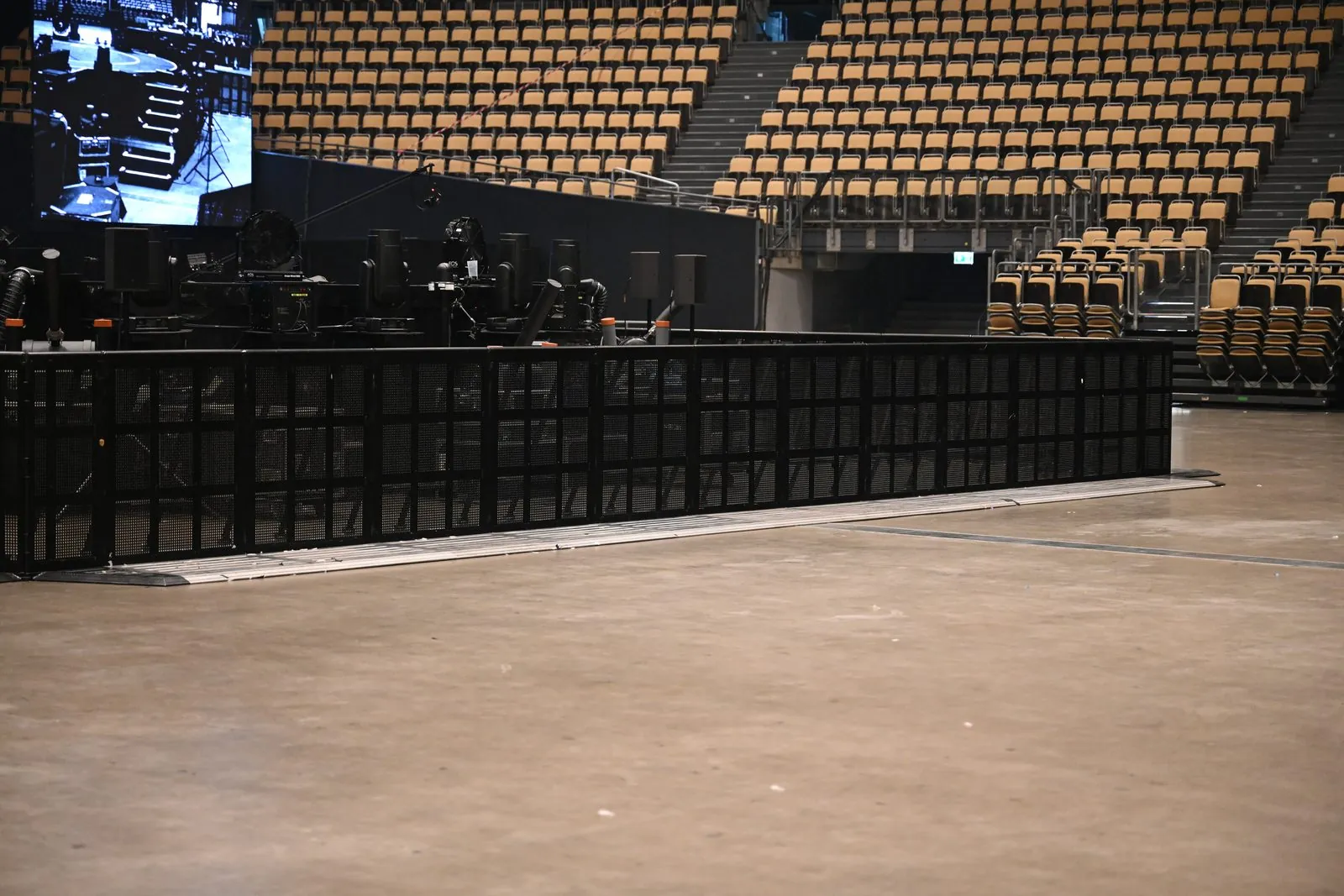
Mojo barriers were used at the Eurovision Song Contest in Rotterdam in 2021 and in Liverpool in 2023.
Photo: example
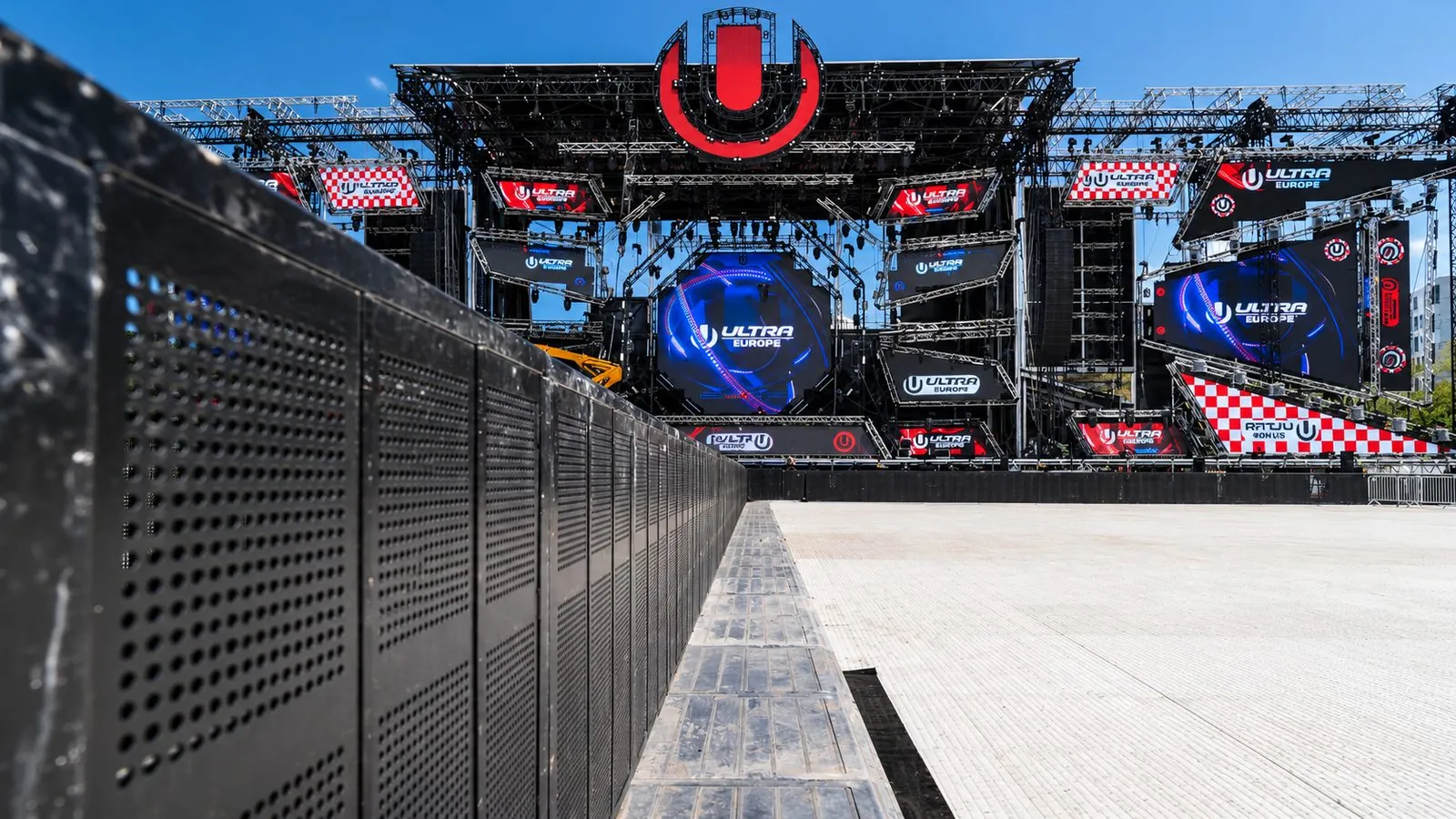
Mojo barriers were used on the Australian leg of The Eras Tour, after The 1989 World Tour in 2015.
Photo: example
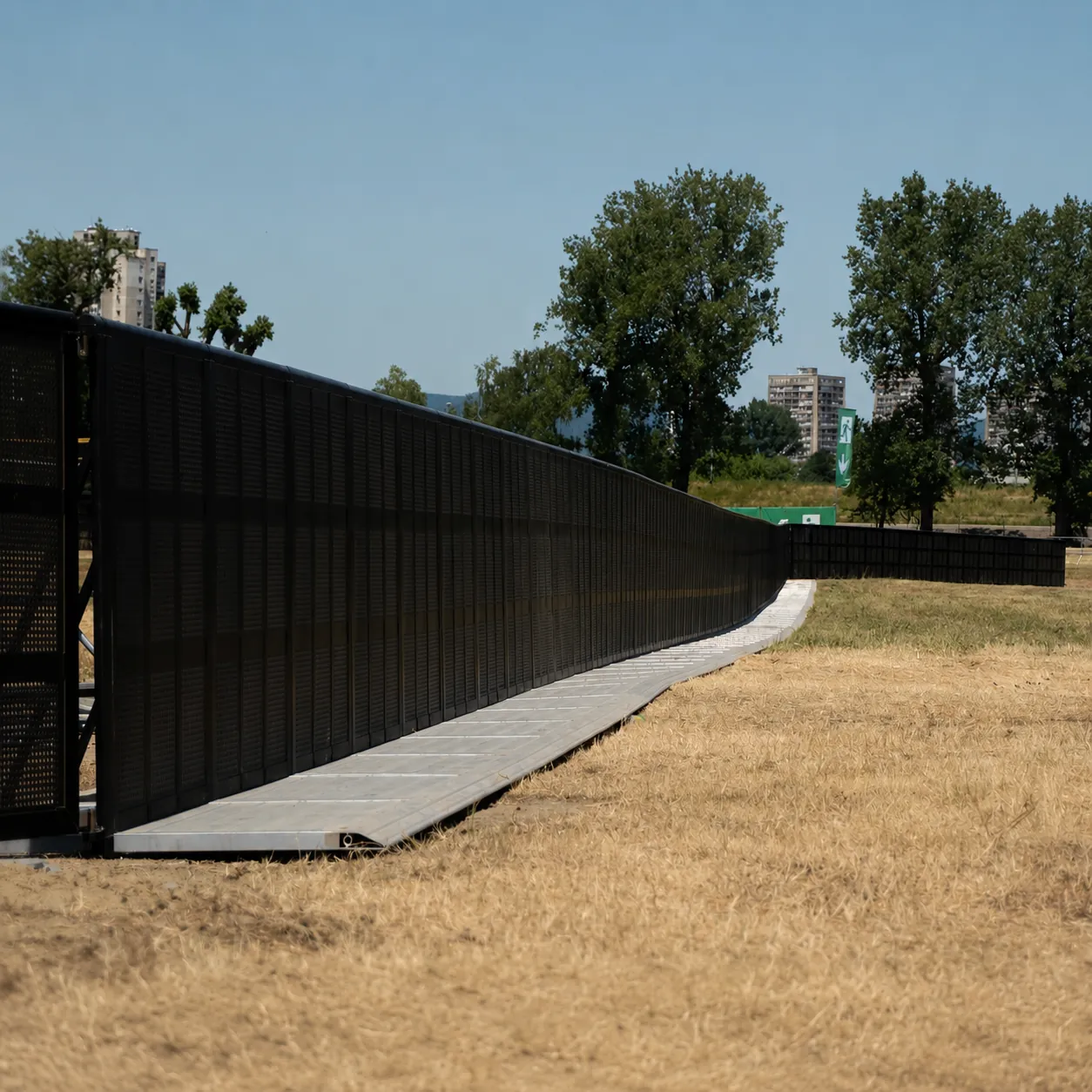
A third Super Bowl after 2023 and 2025 in New Orleans, and AC/DC's US stadium dates at Empower Field, NRG Stadium and the Alamodome.
Photo: example
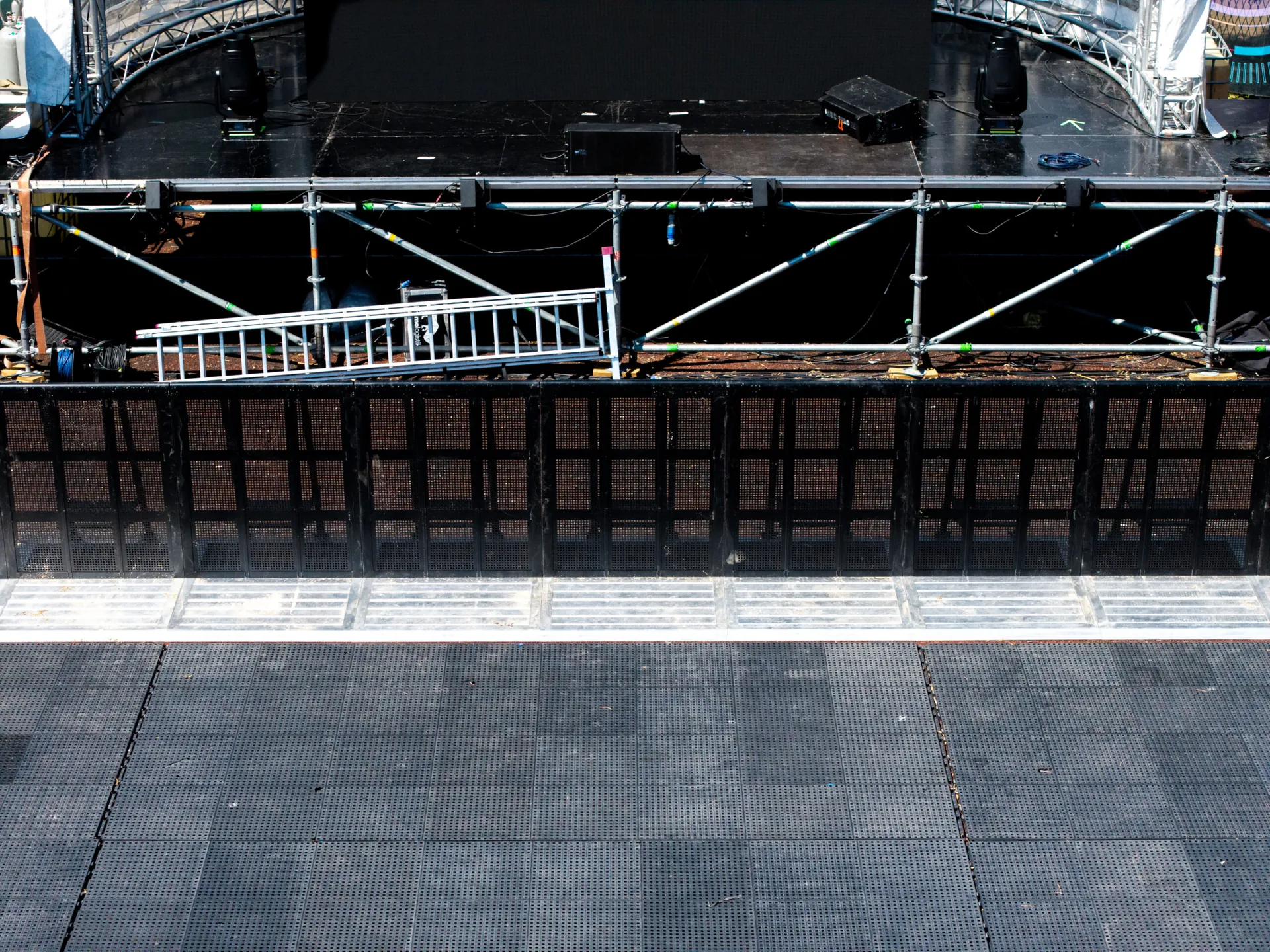
FAQ
Projects from 2018 to today are collected on the references page.
Besides tours and festivals, Mojo barriers were used at large public events:
| Year and event | Barrier |
|---|---|
| 2007 · Live Earth | More than 1,200 m at the concerts in London, New York, Sydney and Amsterdam |
| 2010 · World Cup final, Amsterdam | 850 m on the Museumplein for 100,000 fans, then 1,200 m for the team's homecoming |
| 2012 · Diamond Jubilee, London | More than 400 m at the concert in front of Buckingham Palace and along The Mall |
| 2012 · BRIT Awards, London | 2,510 m of barrier equipment at the O2 Arena |
| 2013 · MTV EMA, Amsterdam | 325 m of stage barrier around the main stage, B-stage and catwalk |
Over the years the barrier was joined by:
In the summer of 2016 Mojo barriers went on tour with:
What's next
New test results, products and events from Mojo Barriers BV are published in the company news.