Where to rent
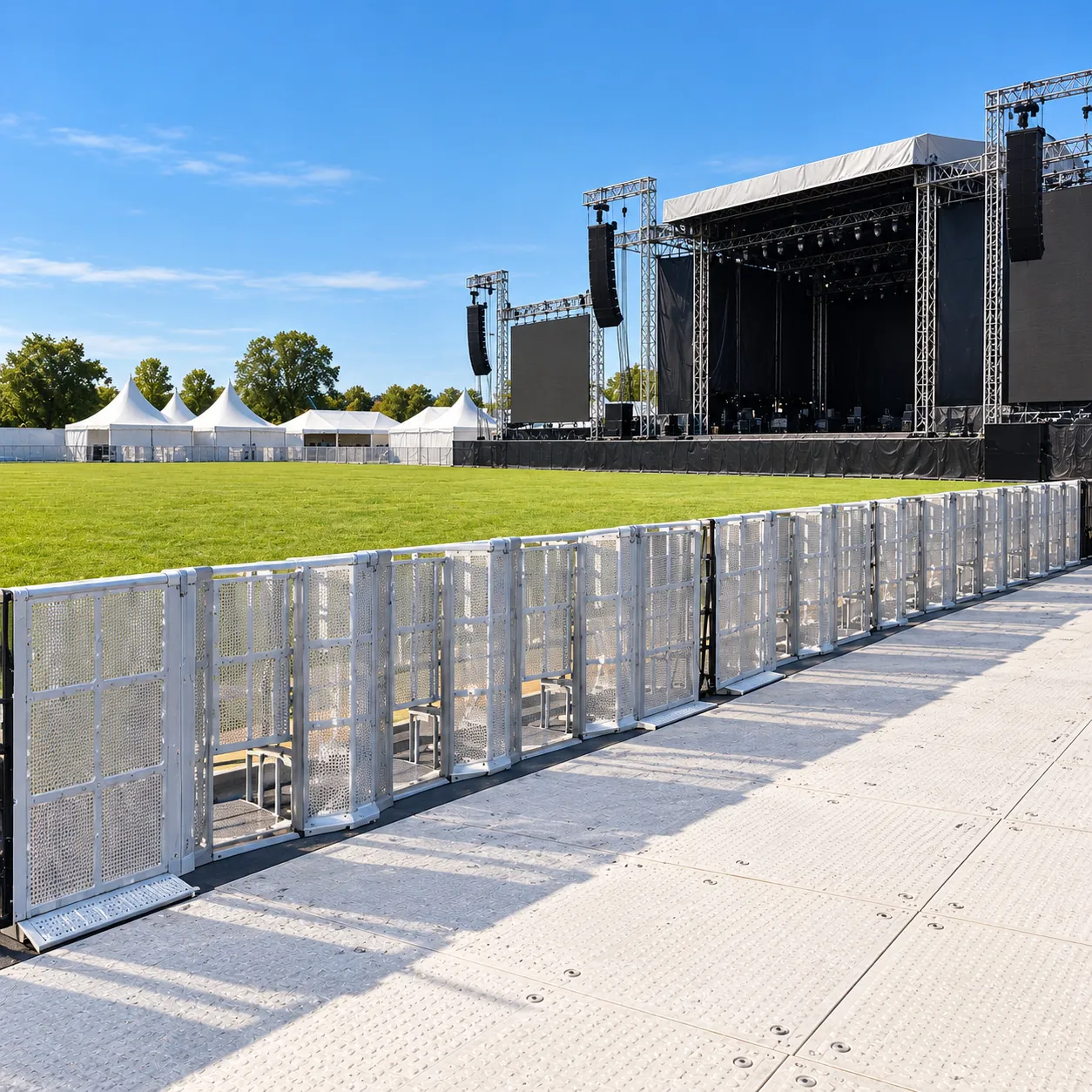
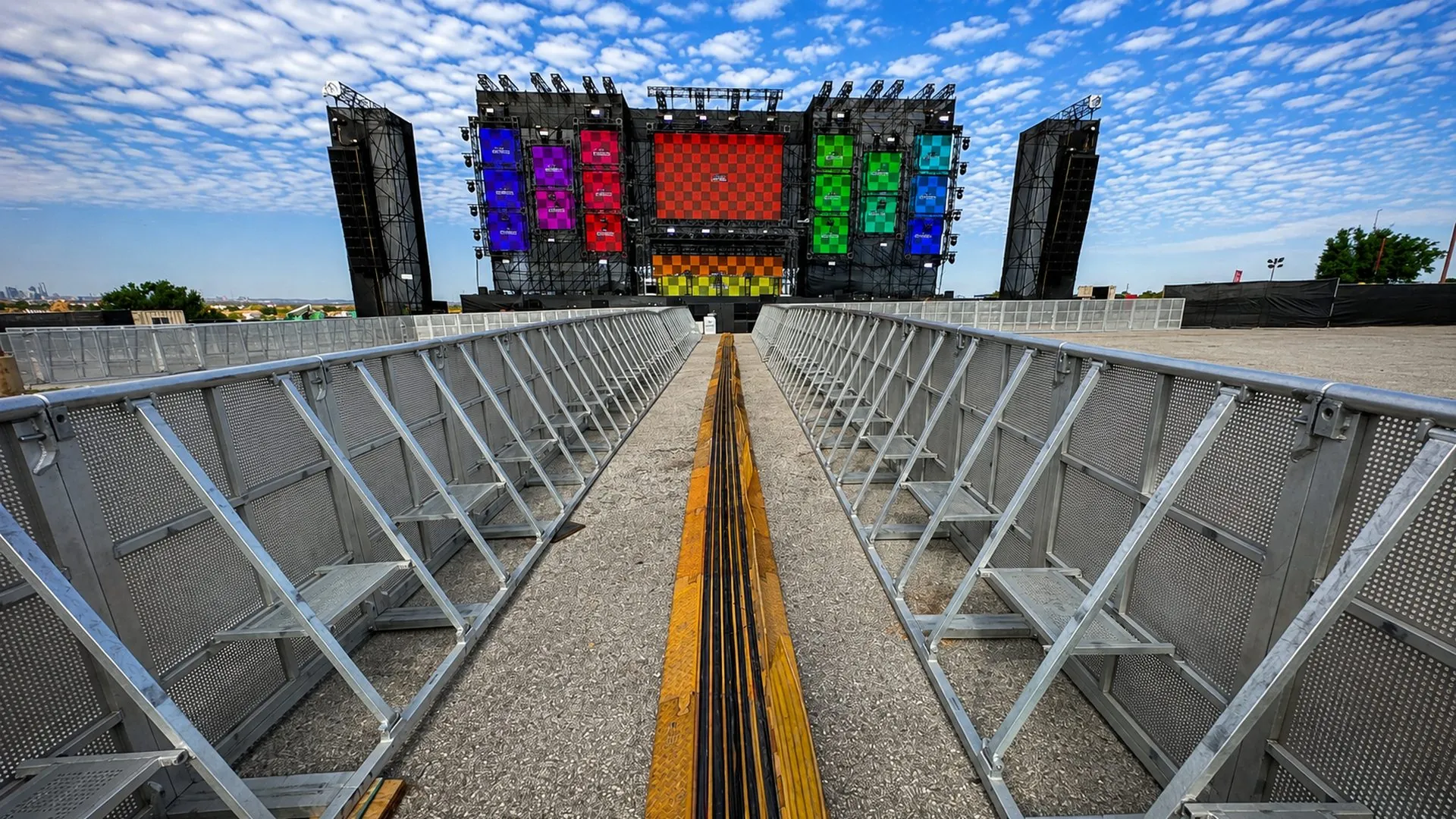
Double Mojo Barrier line in front of a large stage

Crowd control

Mojo Barriers
crowd control

Mojo Barriers crowd control systems guide and separate audiences at concerts, festivals, sporting and public events, with the layout for your event planned by the MOJO Holding Group rental company in your country.

What it means

What crowd control
really means

Crowd control is the physical side of crowd safety: the barriers, gates and lanes that guide and separate people at a venue or event site. Crowd management is the wider task of planning and running the whole crowd, including staff, procedures and the information people receive. On an event site, crowd control barriers keep the audience apart from the stage and the working areas, divide large areas into sections, control how many people enter a space and keep routes and exits usable. The two only work as a pair. In 2006, crowd safety research concluded that a barrier configuration succeeds only when the event also has the right management behind it to choose the right design for the situation. The same applies at concerts, festivals, sporting events, public celebrations and anywhere large numbers of people gather.

Our influence

Four ways Mojo Barriers shaped crowd control

01/04
1988

A barrier designed for the job

Mojo Barriers began in 1988 at Mojo Concerts in the Netherlands, as the company's own answer to what should stand between a stage and its audience. The first barriers were made of steel; in 1998 the system moved to aluminium.
Pens

Front of stage split into pens

From 2001, Mojo Barriers worked with the organisers of Roskilde Festival on a layout that divided the area in front of the main stage into four pens. The pens were emptied between bands, so security staff could control how many people stood in front of the stage. From 2008, Line-up Gates controlled the flow into the pens.

Second line

A second barrier takes pressure off

On a world tour in 2007, an arc-shaped secondary barrier with eight Line-up Gates split the audience and reduced the load on the front-of-stage line. At Glastonbury Festival in 2017, secondary barrier systems stood at the two largest stages, the Pyramid Stage and the Other Stage, and gave security staff more access to the audience.

Data

Layouts based on measurements

At Roskilde Festival in 2011, the Barrier Load Monitor System showed pressure peaks mostly in the first half of a set, and that small changes in the angle of corner curves affected the readings. That year the pens were resized to spread the pressure more equally. The measurements belong to the development and research programme.

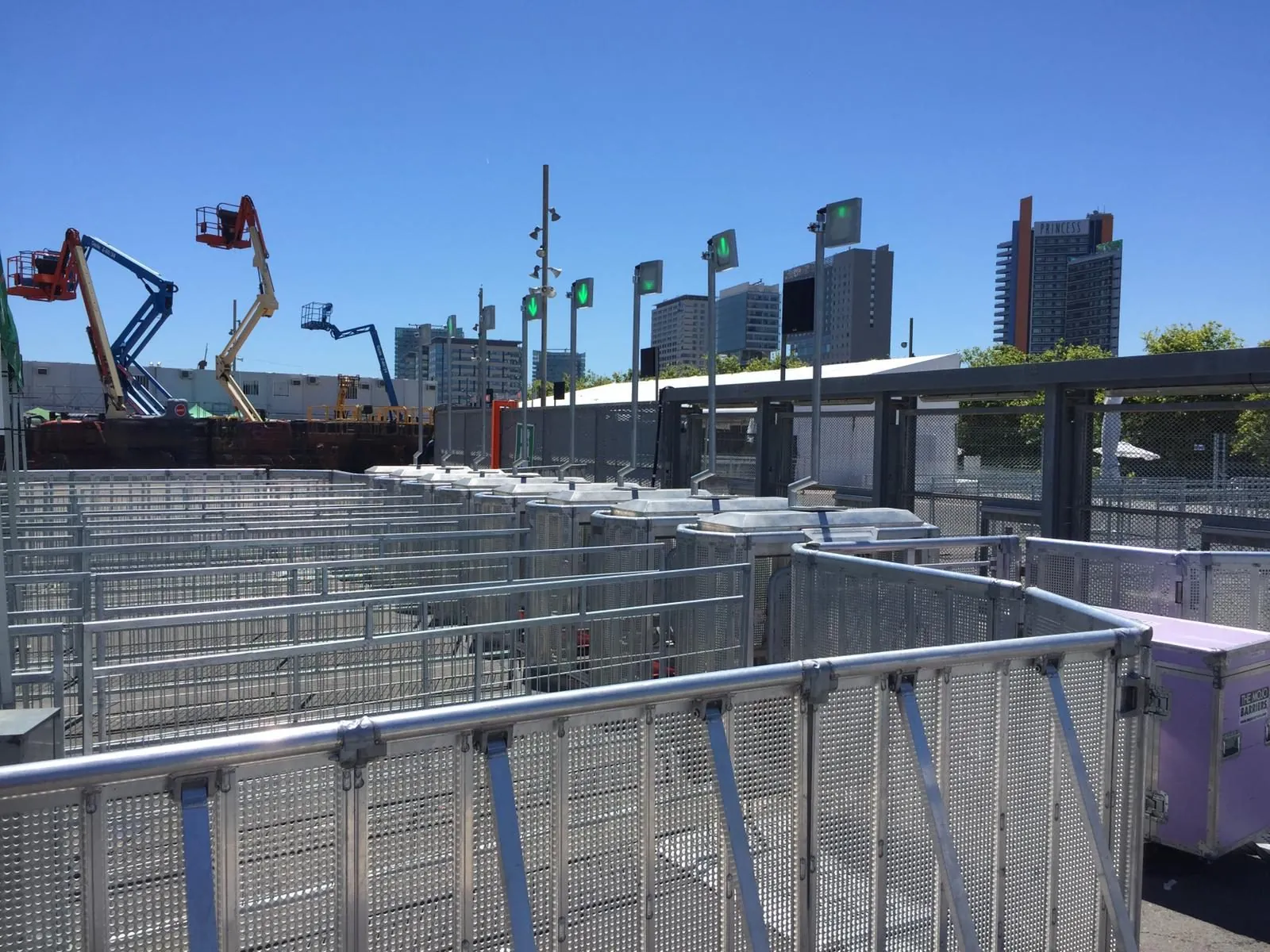
Mojo Barrier queue system during festival build-up
Embossed MOJO BARRIERS logo on aluminium, detail
Designed and developed by Mojo Barriers BV.

Who does what

Developed by Mojo Barriers,
planned with your rental team

Mojo Barriers BV designs and develops the barrier systems. The rental companies of the MOJO Holding Group work with them at events in each country.

01 Mojo Barriers BV
Develops the barrier systems, has them independently tested and brings in what research and events have shown.
02 Rental company
Plans the layout with the organiser and the security team, then delivers and sets up the barriers.
03 On site
Supports the event, and the line can still change: at the New Orleans Jazz and Heritage Festival in 2012, layouts at single stages were moved daily for different crowd sizes.

Planning

Four questions behind a barrier configuration

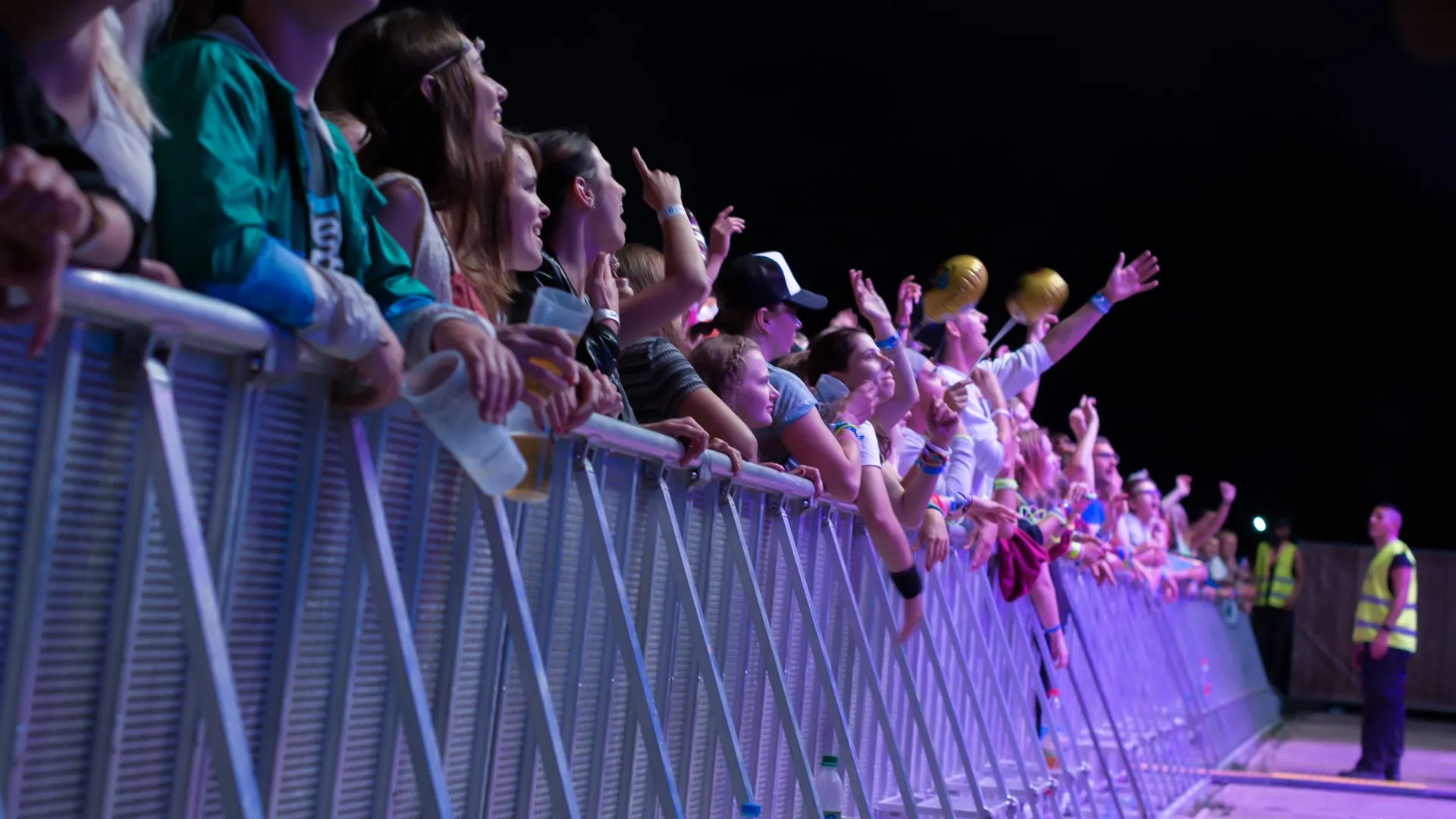
Fans at the Mojo front-of-stage barrier at night
Occasion and genre

What kind of event is it?

A barrier configuration starts with the type of occasion and, at concerts, the musical genre, because both shape the layout. In 2014, Mojo Barriers described its work as analysing site layout, audience demographic and event genre to predict crowd flow, and said that organisers were bringing it in from the early planning stages.

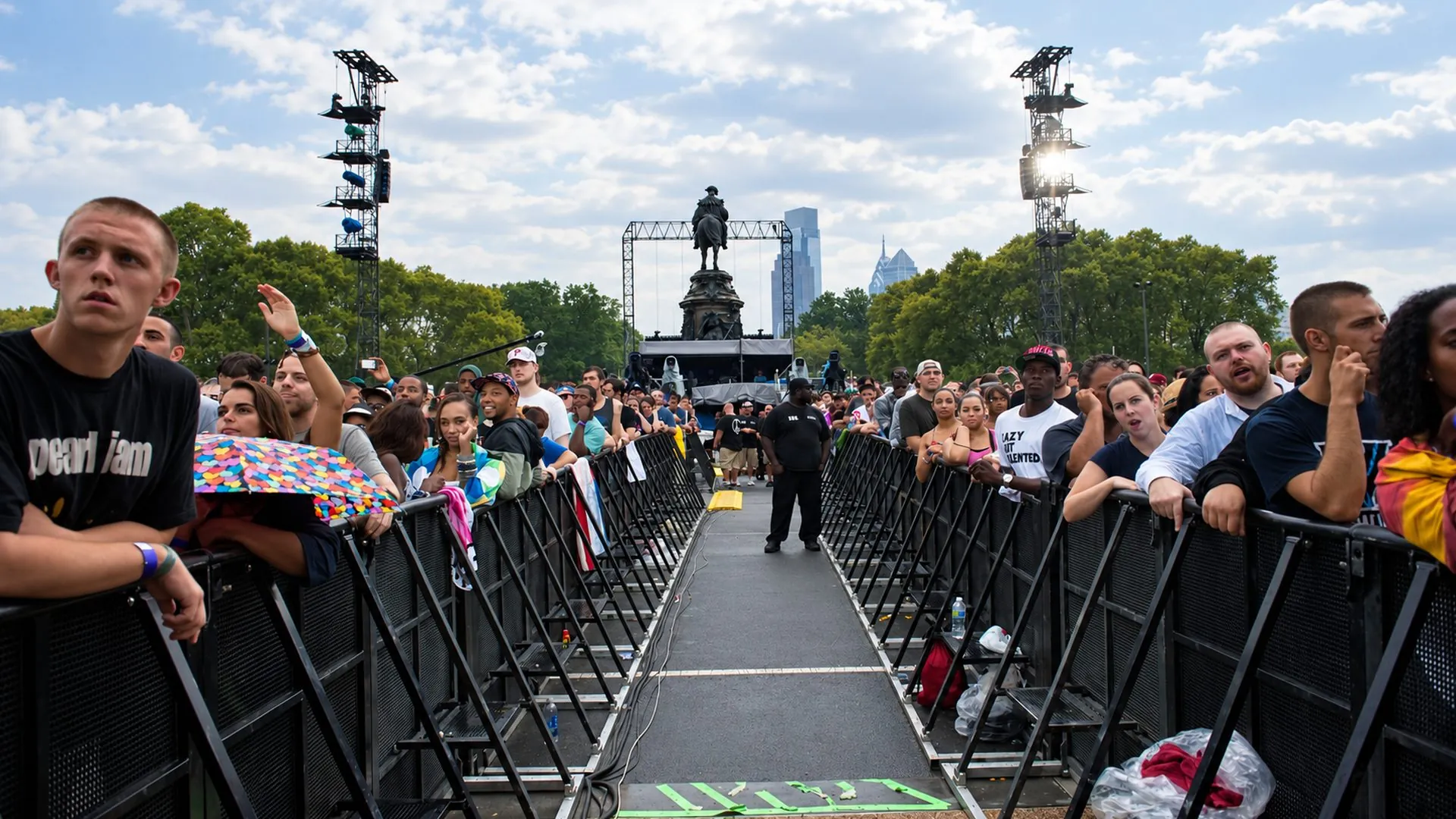
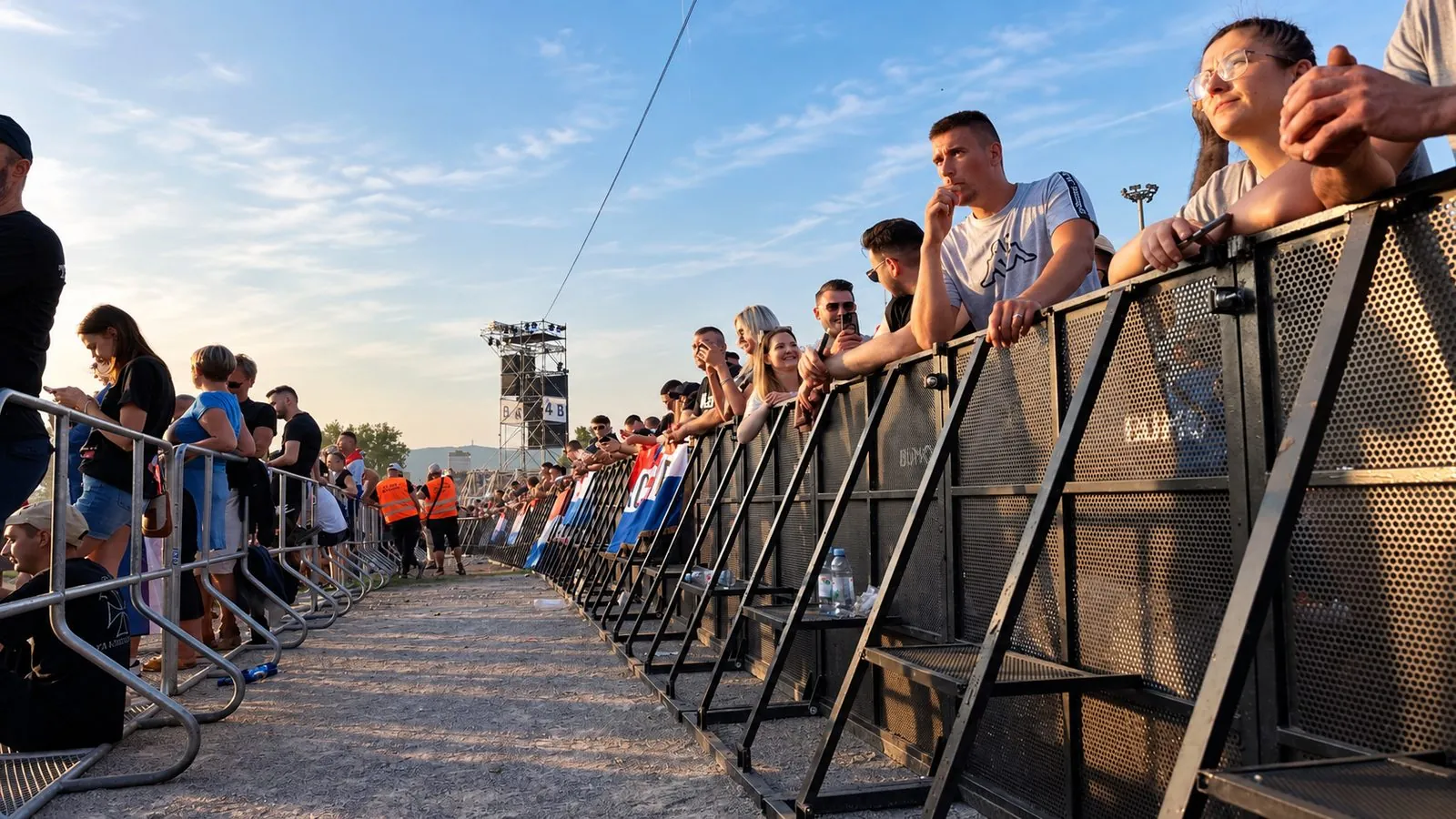
Crowd behind Mojo Barriers at an open-air festival
Audience and size

Who comes, and how many?

The audience demographic and the expected crowd size come next. In 2013, a configuration in Australia was matched to the location, the type of music and the capacity of the event, with the production team, the site team and security. Line-up Gates, Mega Exits and high fencing were described then as key elements of crowd management in high-density areas.

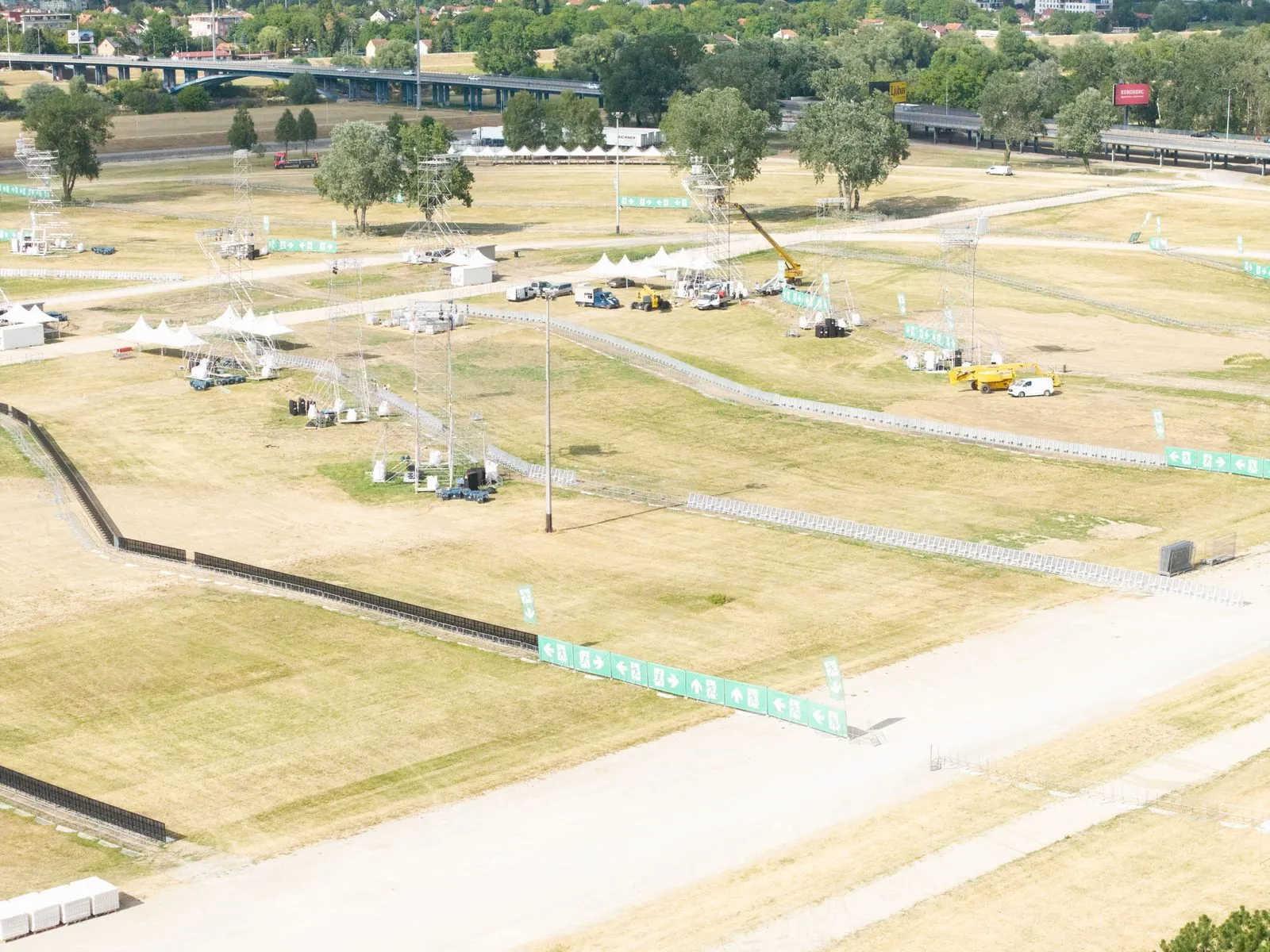
Aerial view of a festival site with Mojo Barrier lines
Site and terrain

Where does the line run?

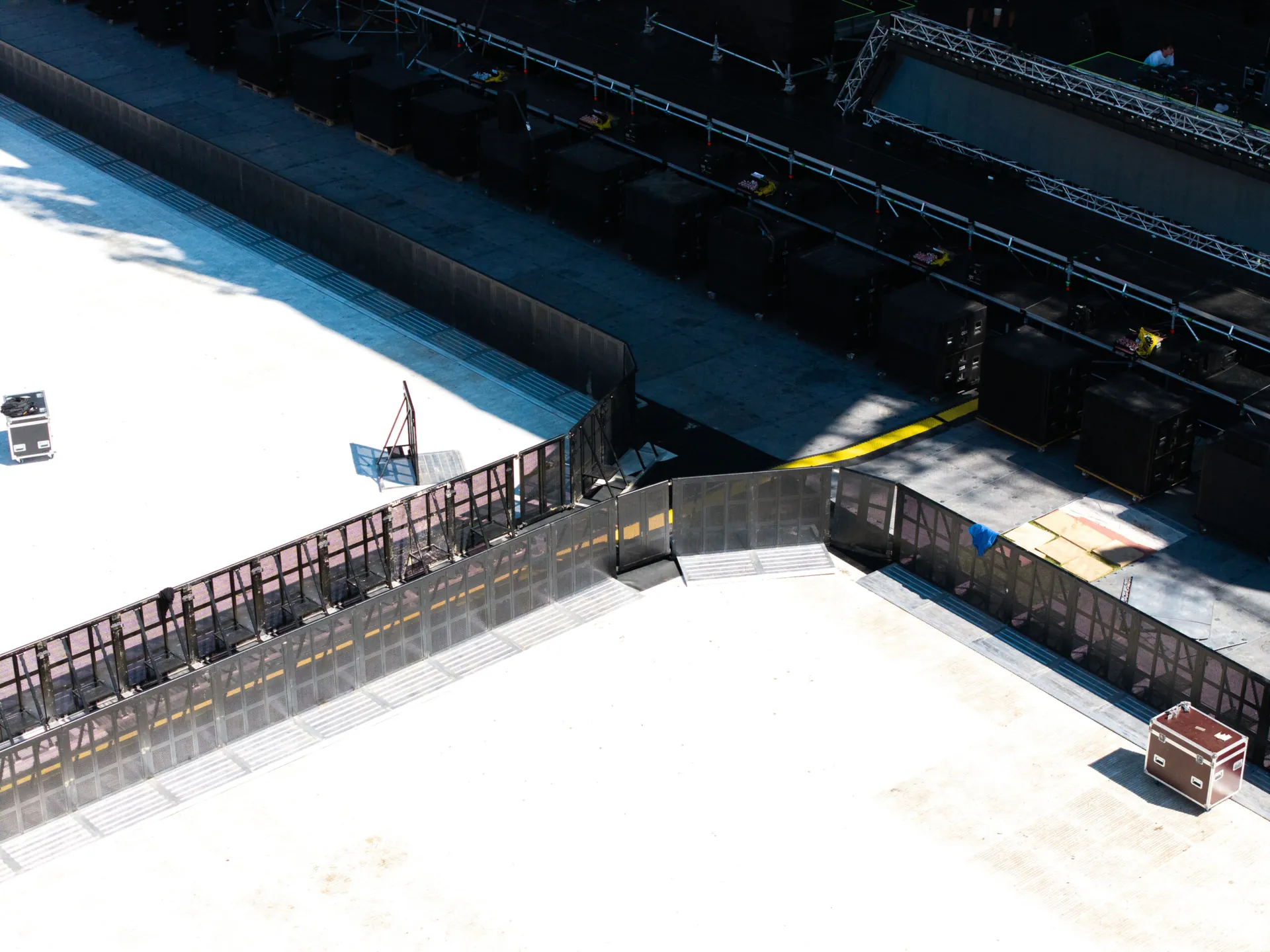
Site layout and terrain decide where the barrier line can run. Corners let the line follow the stage, a thrust or a catwalk, using the Fixed Corner 22.5°, the Fixed Corner 45° or Vario & Flex Corners. At Download Festival in 2013, each stage was planned with the organiser and the security company, taking in ground conditions, slopes and the crowd movements between stages and at the entrances and exits.

Aerial view of a Mojo Barrier corner in front of a stage
Together and on site

Planned together, adjusted on site

The layout is agreed with the organiser, the site team and security. At Lollapalooza in 2013, the site and the expected crowd movements were assessed with the producer and security before the two main stages received a new configuration: a thrust leading to an off-centre front of house, which gave security and crew more space and opened up the sightlines.

Where it is used

Where crowd control barriers are used

The Mojo Barrier® system, with its corners and gates such as the Mega Exit, covers five main uses, all shown in the barrier range for crowd control. Bars and sales counters use the Bar Barrier for serving areas, which is not a crowd control barrier.

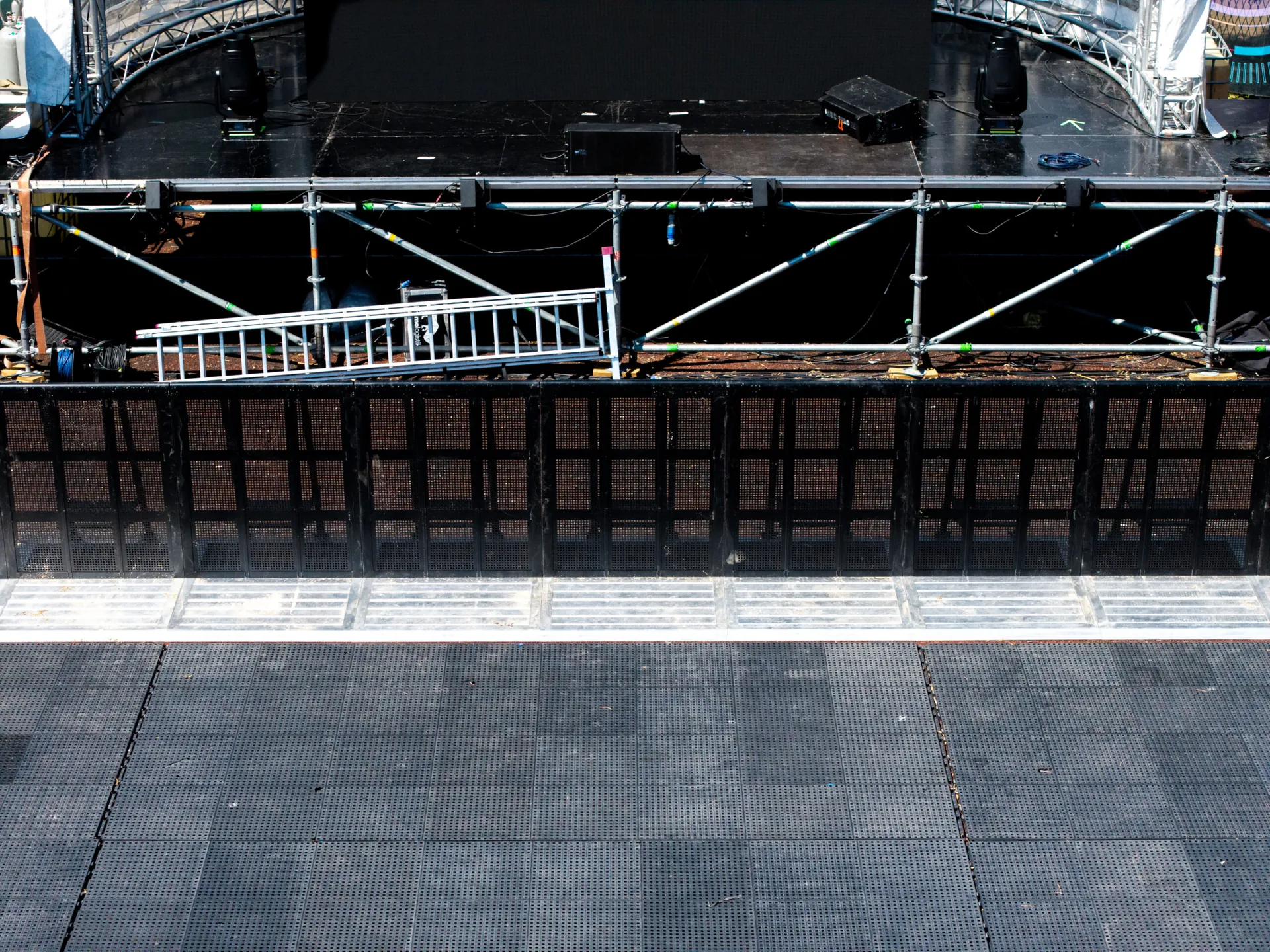
Black Mojo front-of-stage barrier line from above
Area 01

Front of stage and pit

A front of stage barrier line keeps the audience apart from the stage and the pit. Pens and secondary lines divide the crowd, enclosures surround front of house and delay towers, and the line follows thrusts, catwalks and B-stages. The Snake Runner & Snake Gate lets cables and crew cross the line.

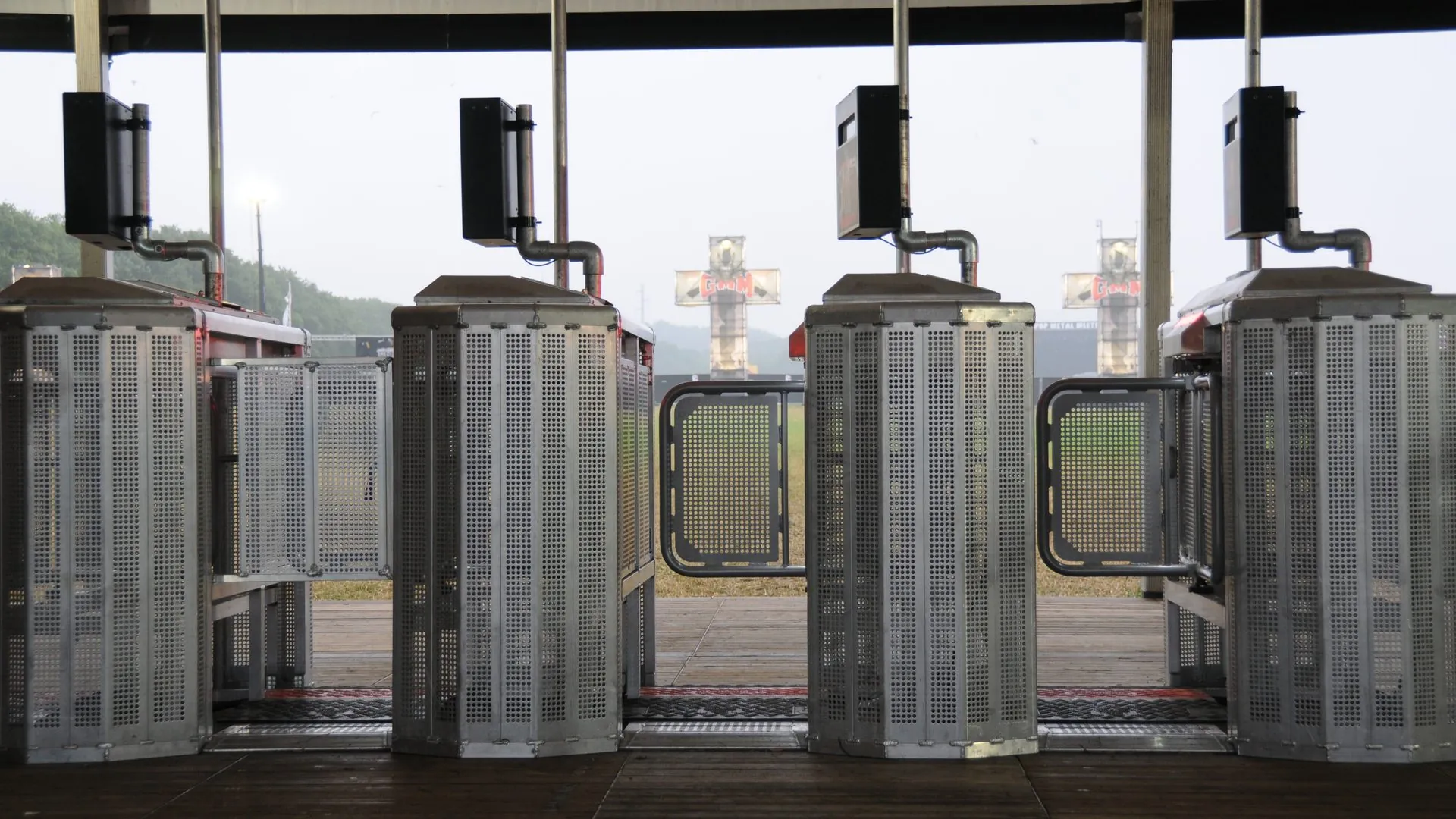
Mojo Gatekeeper lanes with ticket scanners
Area 02

Entrances and queues

Line-up Gates form lanes with space for security checks and ticket scanning, so busy entrances stay orderly. The Gatekeeper turnstile counts people in and out.

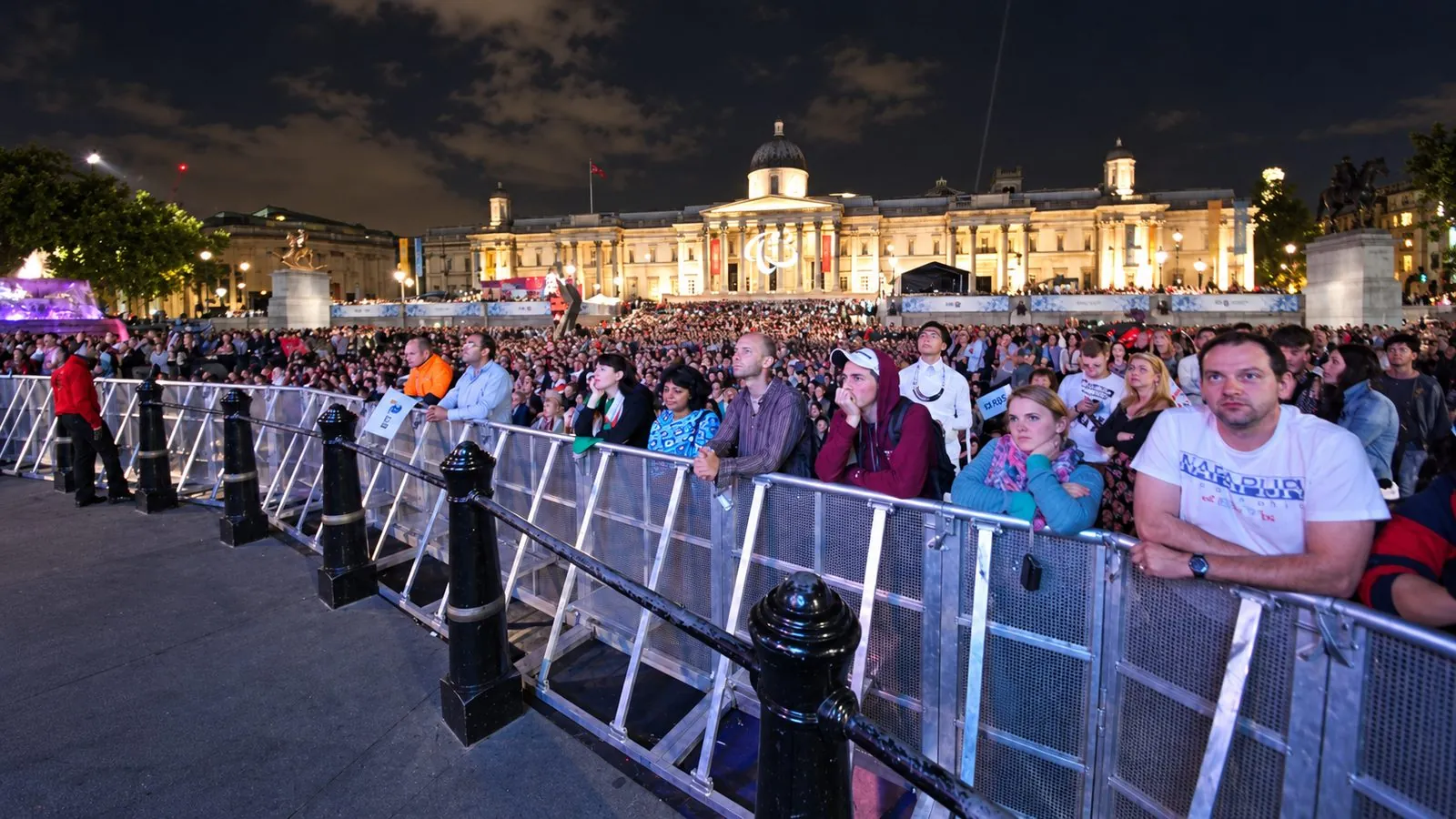
Crowd behind Mojo Barriers on a city square
Area 03

Public spaces and transport

Barrier lines shape fan zones and city squares and channel passengers along the routes from railway stations to venues.

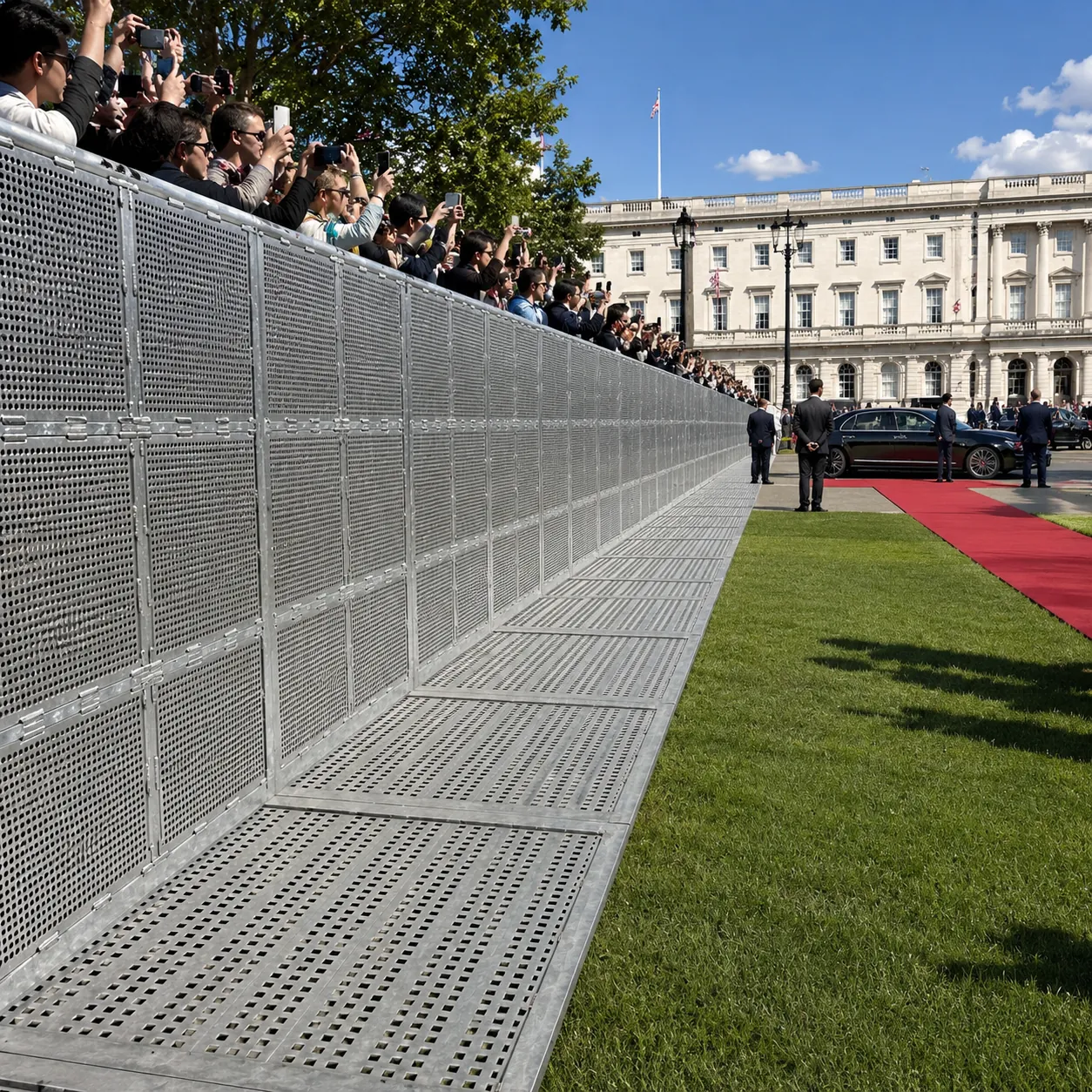
Mojo Barriers along a red carpet
Area 04

VIP, media and red carpets

Barrier lines separate VIP areas, golden circles, media pits and red carpets from the main crowd, while the general audience keeps its view.

Mojo High Fence around a restricted zone
Area 05

Restricted zones

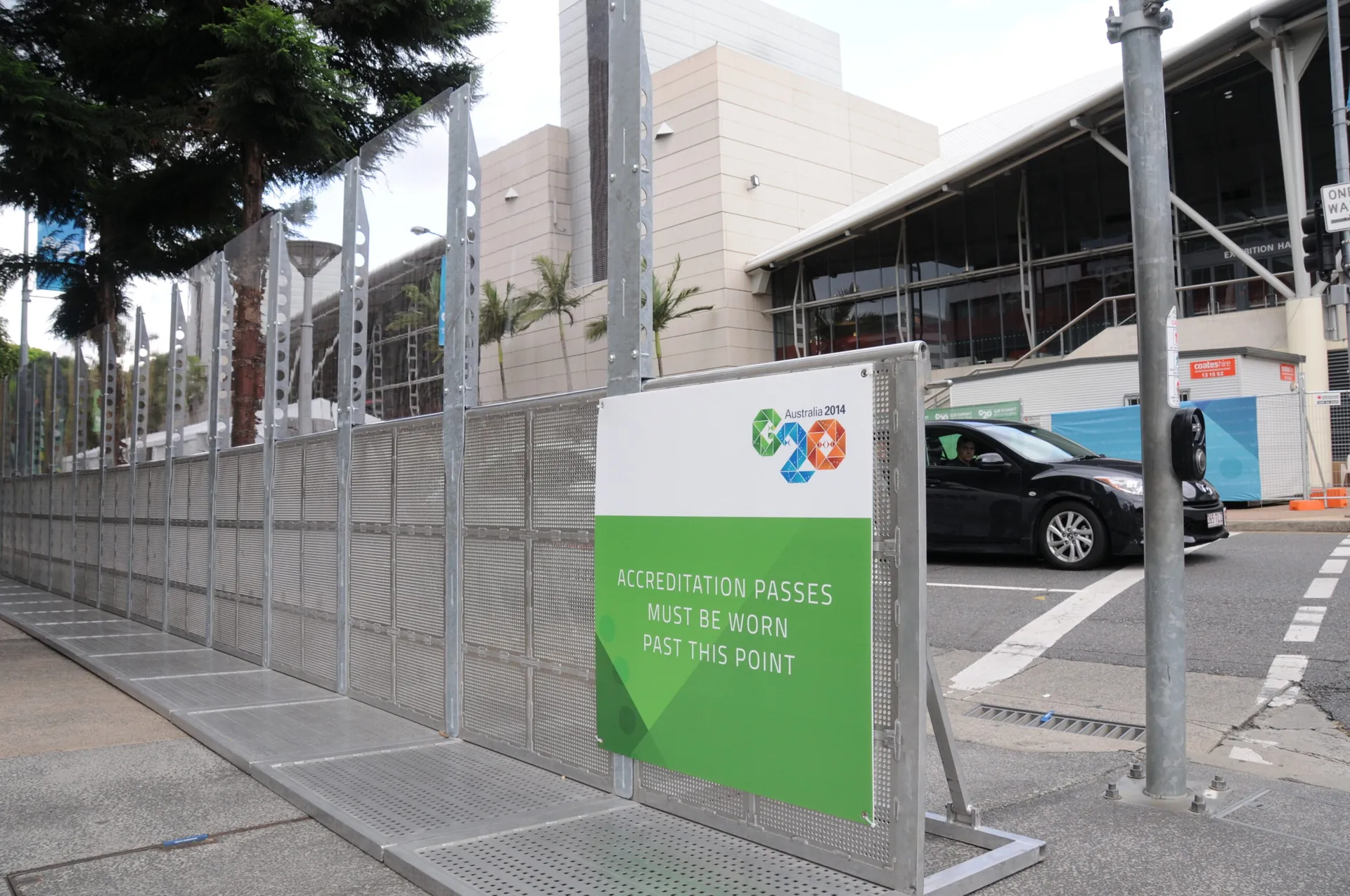
The Mojo High Fence closes off restricted areas and walkways with sections 1 m wide and 2.4 m high, each with a see-through polycarbonate upper panel.

Proof

Trusted worldwide,
event after event

At Glastonbury Festival in 2017, 15 Line-up Gates and a Mega Gate at the bottleneck to the campsite reduced queuing. For London 2012, around 700 m of barrier at each of three railway stations channelled passengers to the venues. In Amsterdam in 2010, a fan zone on Museumplein grew from 850 m to 1,200 m of barrier, with two VIP areas for the team's homecoming. At the MTV Europe Music Awards in 2013, the line followed the main stage, B-stage and catwalk, and the red carpet was kept separate.

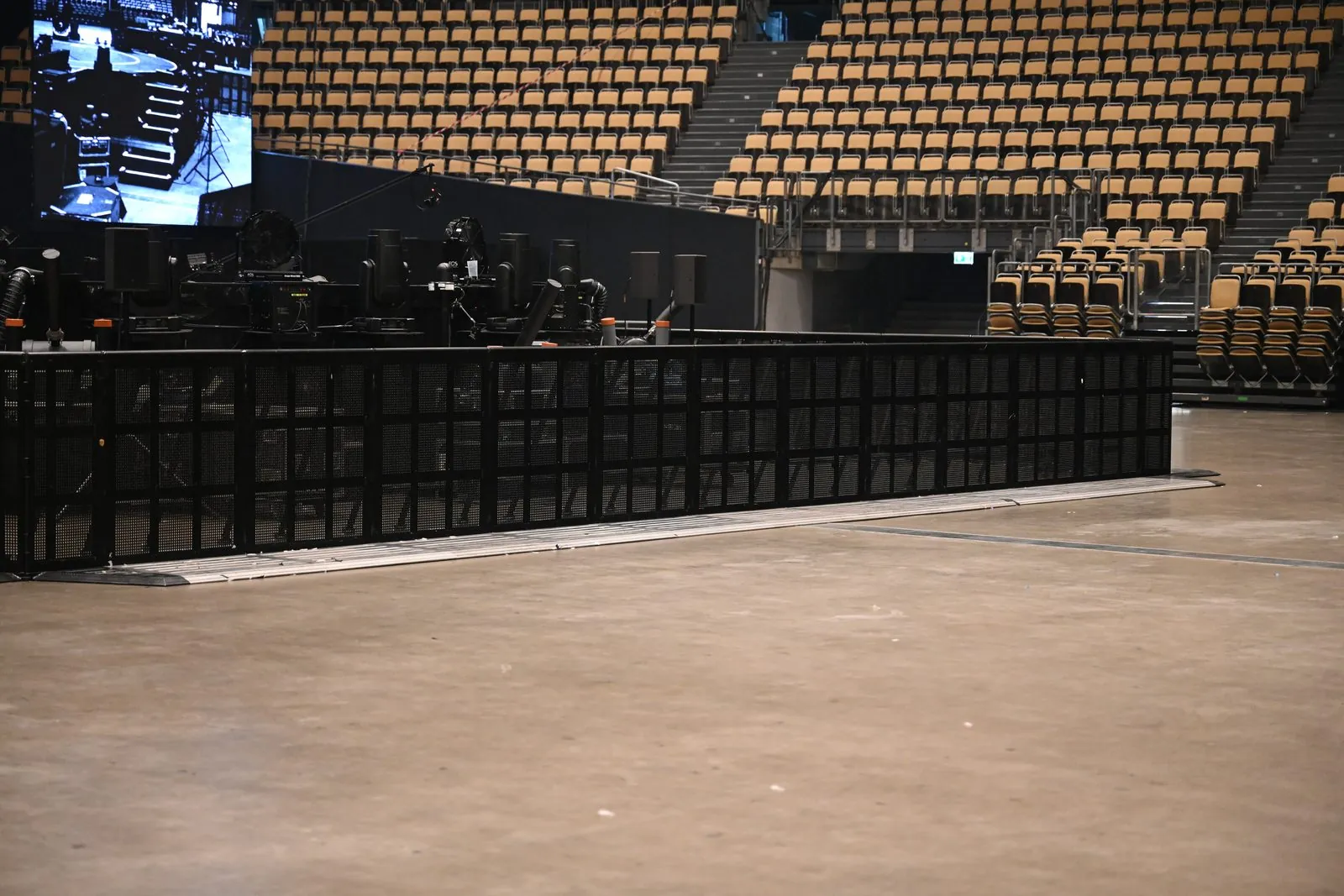
Black Mojo Barrier line in front of a stage in an indoor arena
Evidence

Mojo Barriers was named Crowd Barrier Supplier of the Year at the Event Production Awards in London in 2015. In 2016, its barrier configuration for BoomTown Fair 2015 won Best Crowd/Pit Barrier at the Festival Supplier Awards.

FAQ

Questions about crowd control

The amount of barrier depends on the site, the number of stages and the layout. Examples by event and year:

EventBarrier used
Roskilde Festival, 2008over 1,000 m of aluminium Mojo Barrier, including BLMS sensor barriers
Download Festival, 2013over 1,100 m across five music stages, each with its own barrier design
Lollapalooza, 2013660 m, with new layouts on the two main stages
MTV Europe Music Awards, 2013325 m in the Ziggo Dome, over 160 m of it along the main stage, B-stage and catwalk
Soundwave, Australia, 2013over 4.5 km across five festival sites
Glastonbury Festival, 20171,400 m across 16 stages
  • the force on 34 BLMS sensor barriers placed at key points of the front-of-stage line
  • video of the audience, with a commentary on what was happening on stage
  • readings from pressure suits worn by six students placed in a grid, each suit with a temperature gauge
  • a stage with video wings, so the audience had less need to push forward for a better view
  • screens and delay towers, which reduced the pressure to get to the front
  • an improved PA system
  • separate queues for each main stage band, with each pen cleared after the act

The two areas with the most intense crowds, the main arena and the second stage, had secondary barriers, and the main arena also a third crowd break higher up the hill. On the main stage, a central thrust running through to the mixer position reduced the sideways movement of the crowd and gave security better access to the audience. The organiser wanted open sides on the secondary barriers.

For the 2010 World Cup final screening on Museumplein in Amsterdam, the call came on Wednesday 7 July. The first meetings were held on the Thursday, the site build started on the Friday, the barriers were loaded in on the Sunday morning and extra barriers were added on the Monday for the homecoming.