Two sites, one weekend
Pearl Jam, Muse, Franz Ferdinand, Kaiser Chiefs, Arctic Monkeys and Primal Scream were among the acts that played to more than 150,000 fans at the Carling Leeds and Reading Festivals in 2006.
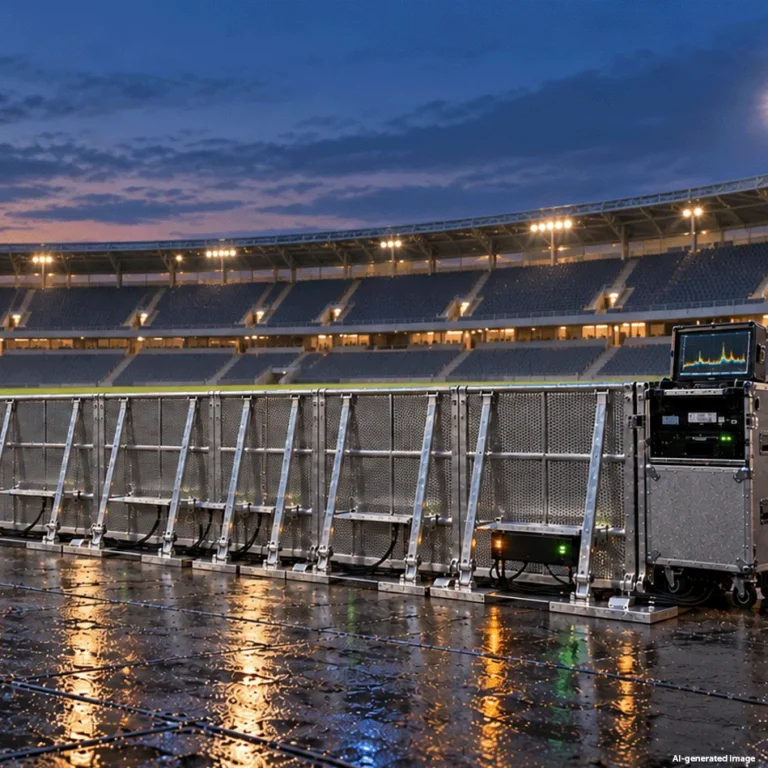
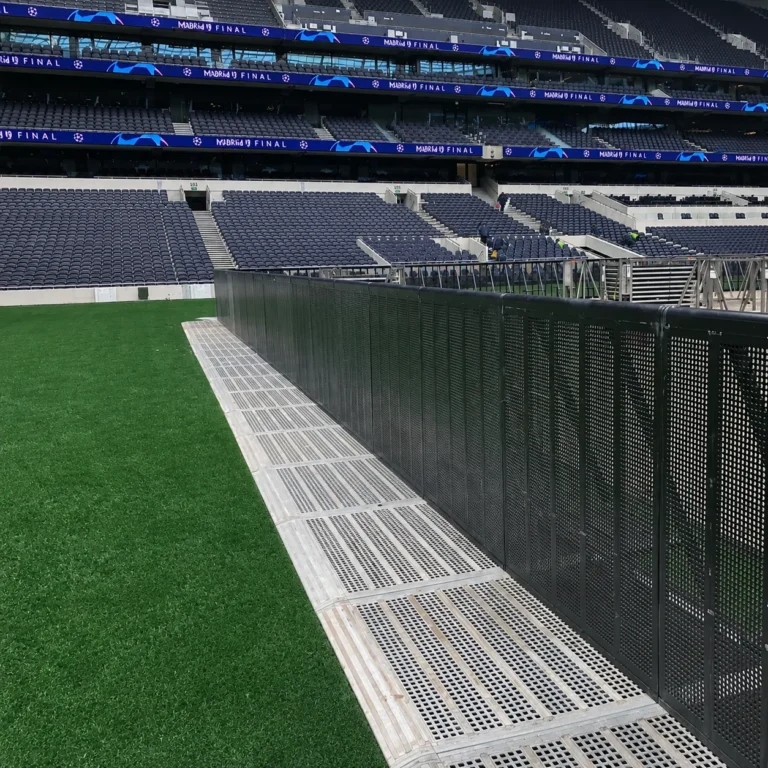
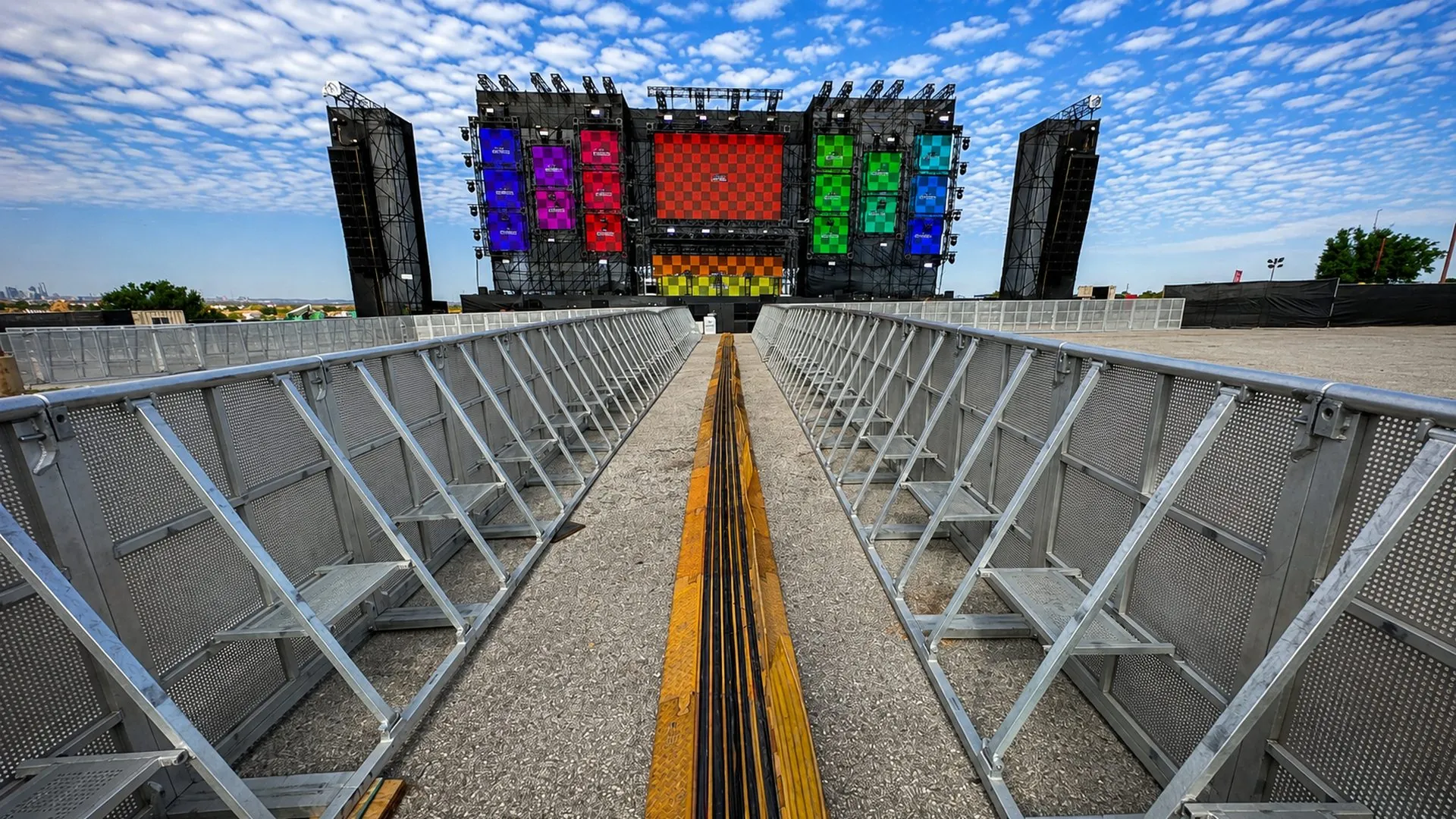
Mojo Barriers supplied more than 1,000 metres of barrier across the two sites. Aluminium Mojo Barrier with the Barrier Load Monitor System (BLMS) formed the main front-of-stage systems. Between the front-of-house mixer and the stage, both festivals used a new secondary barrier system: steel barrier in a new configuration.
Pearl Jam's previous European festival tour had been overshadowed by the deaths of nine people during their show at Roskilde. Their return to festival stages in 2006 came with particularly close attention to health and safety.
Measuring the pressure
Festival director Melvin Benn of Mean Fiddle had developed both sites over the years. Over the previous two years, the festivals worked with Mojo Barriers and a team from Buckinghamshire Chilterns University College on research with BLMS, which measures the pressure on the front-of-stage barrier.
… in the past two years we have worked closely with Mojo Barriers and a team from Buckinghamshire Chilterns University College in conducting research with their Mojo BLMS system that measures the pressure exerted on the front of stage barriers. This has been pioneering research in monitoring the well being of our audiences.
Since the research began at Leeds in 2004, BLMS had been used at more than 30 concerts and festivals across Europe.
We are just starting to correlate pressures with factors such as bands, gradients and notably, barrier design. It is still early days for the research …
A second line further back
Melvin Benn wanted to keep the atmosphere in front of the stage, without sterile pens or a segregated golden circle. Video of a crowd surge at an Oasis concert in Manchester the year before shaped his thinking about preventing surges from further back in the audience. The answer was the new secondary barrier line.
… I’m delighted with the way the barrier we designed has worked. It’s been self policing in terms of numbers and done exactly what I hoped.
Jim Gaffney led the team from the Mojo Barriers UK office that set up the barriers at both sites.
It was quite a novel approach of Melvin’s, but I have to say it worked out very well. It seemed to help fans who wanted to see a particular band without getting surfed across or dragged into a ‘mosh pit’.